Omnivore was the polished open-source read-it-later app that combined a beautiful reader, AI-assisted highlighting, and Apple-platform parity that no self-hosted competitor matched. The November 2024 ElevenLabs acquisition killed the hosted service and dumped the code open-source, but the GitHub repo has not seen meaningful commits since. After Pocket shut down in July 2025 too, the read-later space rebuilt around new tools. These Omnivore alternatives cover the realistic landing spots in 2026.
This piece focuses on desktop tools across Windows, macOS, and Linux. We compared reading polish, highlight workflows, AI features, mobile apps, and how each tool handles the data we export from Omnivore. Whether we want a hosted free tier, a paid premium reader, or full self-hosting, one of these is the right next home.
Quick comparison
| App | Best for | Free option | Paid starting price | AI features |
|---|---|---|---|---|
| Karakeep | Self-hosted with AI tagging | Yes (FOSS) | Free | Yes (local LLM) |
| Readwise Reader | Best paid hosted reader | No (trial) | $9.99/month | Yes |
| Matter | Best free hosted reader | Yes | $7.99/month Pro | Yes |
| Wallabag | Long-running self-hosted | Yes (FOSS) | Free | No |
| Readeck | Clean read-focused self-host | Yes (FOSS) | Free | No |
| Instapaper | Original read-later, still solid | Yes (basic) | $2.99/month | Limited |
| Reader by Mozilla | New Pocket-replacement project | Beta | TBD | No |
Why Omnivore shut down (briefly)
Omnivore announced its shutdown in October 2024 after ElevenLabs acquired the team and pivoted them onto voice products. The code was open-sourced before the hosted service went dark on November 30, 2024, but the GitHub repo has not had meaningful commits since.
Self-hosting Omnivore from the open-source code is technically possible but practically painful — the project was never designed to run outside its original cloud infrastructure, and dependencies have drifted. Most former Omnivore users moved to one of the alternatives below.
The 7 best Omnivore alternatives for desktop
Karakeep — best self-hosted Omnivore replacement
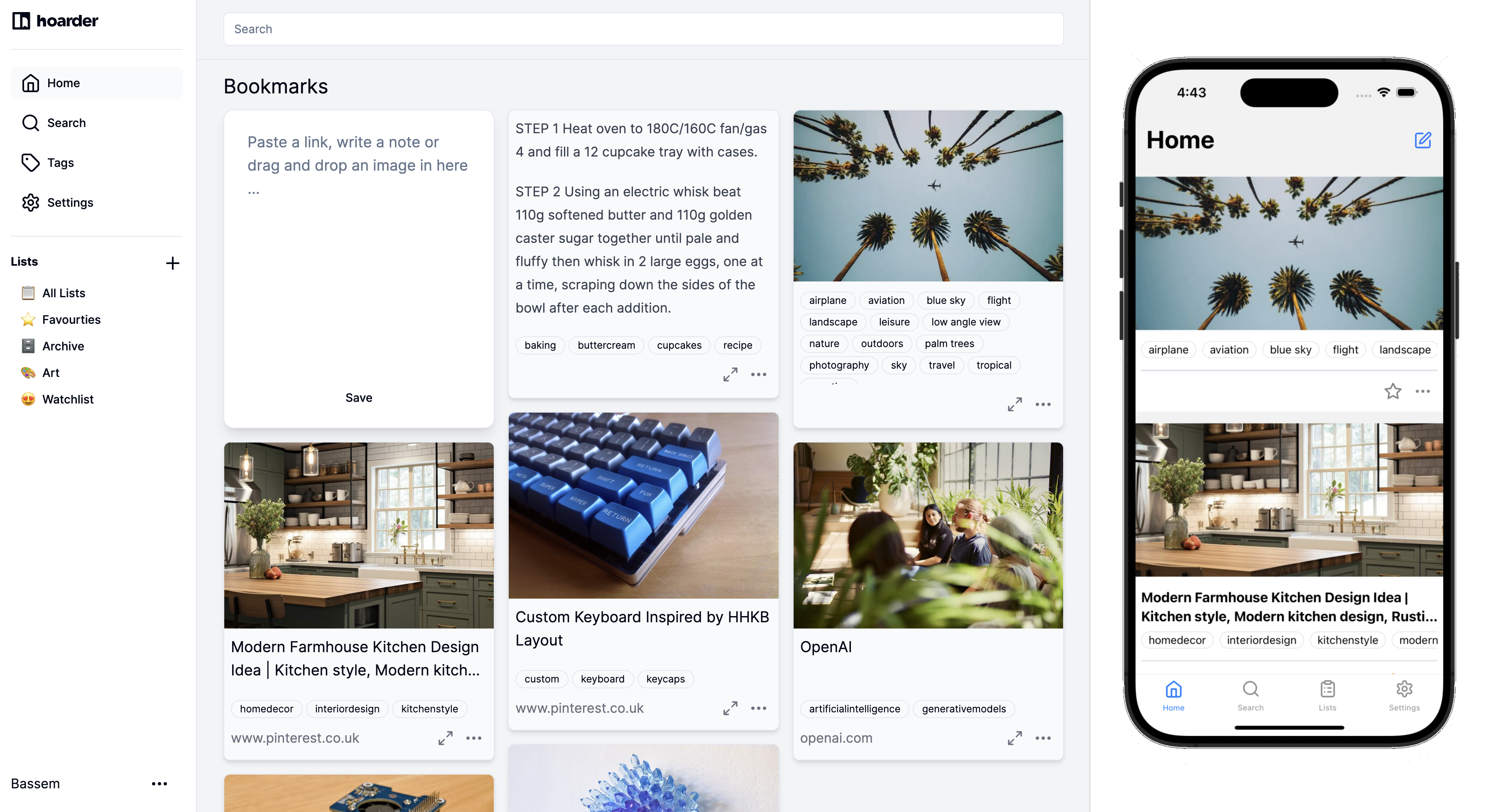
Karakeep is the closest spiritual successor to Omnivore in the self-hosted space. The single-container Docker setup spins up in minutes, the web UI is the cleanest in this category, and the Ollama integration provides AI tagging and summaries locally. The mobile apps for iOS and Android sync reliably.
For ex-Omnivore users who liked the AI angle, Karakeep is the only self-hosted option that preserves it — and because the LLM runs on our hardware, the privacy story is actually better than Omnivore’s cloud setup.
Where it falls short: AI features require Ollama with enough RAM for a small model. The highlight system is solid but trails Readwise Reader’s polish. E-ink device support is not as mature as Wallabag’s.
Pricing:
- Free: full feature set self-hosted
- Paid: none (hosted tier hinted but not launched)
- vs Omnivore: alive, free, and self-hostable
Download: karakeep.app (Docker on Windows, macOS, Linux)
Bottom line: Pick Karakeep if Omnivore’s AI tagging was the feature we miss most. Skip it if we cannot run Docker.
Readwise Reader — best paid hosted Omnivore replacement
Readwise Reader is the paid hosted reader that absorbed the largest share of Omnivore’s user base. The dedicated Omnivore import tool preserved articles, highlights, and labels for users who migrated. The reader view is excellent, the mobile apps are polished, and the highlight-and-review workflow is the deepest in this space.
For users who lived in Readwise’s note-taking ecosystem already, Reader is the natural fit. The integrations with Notion, Obsidian, Logseq, and Anki are best-in-class.
Where it falls short: Hosted on Readwise’s servers — not for data-ownership purists. $9.99/month is significant. The trial is 30 days, no longer-term free tier.
Pricing:
- Free: 30-day trial
- Paid: $9.99/month
- vs Omnivore: paid hosted vs free open-source
Download: readwise.io/reader (Windows, macOS via web/PWA)
Bottom line: Pick Reader if we want the deepest highlight integrations and we are happy paying for them. Skip it if self-hosting matters.
Matter — best free hosted Omnivore replacement
Matter is the hosted free reader that handled a surge of ex-Omnivore users. The free tier is unusually generous — unlimited saves, RSS feeds, newsletter forwarding, full-text search — and the mobile apps for iOS and Android are polished.
For users who want a hosted experience without paying, Matter is the closest match for Omnivore’s free model.
Where it falls short: Hosted (data on Matter’s servers). AI summaries on the free tier are limited. Integration depth trails Readwise Reader.
Pricing:
- Free: unlimited saves
- Paid: Pro at $7.99/month for AI features
- vs Omnivore: hosted vs the late open-source model
Download: hq.getmatter.com (browser, iOS, Android)
Bottom line: Pick Matter if free hosted is the target and we accept the data-ownership trade-off. Skip it if we want self-hosting.
Wallabag — best long-running open-source pick
Wallabag is the open-source self-hosted read-later that has been around since 2013. It is mature, stable, and still being developed actively. The reader view and tagging are functional, the browser extensions and mobile apps are solid, and the ecosystem of integrations (e-ink devices, RSS readers, third-party tools) is the broadest of any self-hosted option.
For users who want stability over polish, Wallabag is the safer pick.
Where it falls short: UI looks frozen in 2018. Docker setup is more complex than Karakeep’s. No first-party AI features. Article extraction sometimes misses content from modern paywalled sites.
Pricing:
- Free: full feature set self-hosted
- Paid: hosted Wallabag.it at €11/year
- vs Omnivore: alive, free, open-source
Download: wallabag.org (Docker on Windows, macOS, Linux)
Bottom line: Pick Wallabag if stability and ecosystem matter more than polish. Skip it if the UI is the friction we want to escape.
Readeck — best clean read-focused self-host
Readeck is the read-focused self-hosted tool that picked up where Wallabag’s interface left off. The UI is opinionated and pleasant, the install is a single Go binary (no Docker), and the reader view is genuinely beautiful.
For users who want a clean self-hosted reader and do not care about AI, Readeck is the easiest install on this list.
Where it falls short: No AI features. No first-party iOS app. Less ecosystem than Wallabag.
Pricing:
- Free: full feature set
- Paid: none
- vs Omnivore: alive, free, far simpler install
Download: readeck.org (Windows, macOS, Linux binaries)
Bottom line: Pick Readeck if we want a fast, beautiful reader and we are happy with manual tagging. Skip it if we need iOS apps or AI features.
Instapaper — best original read-later, still alive
Instapaper is the read-later app that started the category in 2008. It survived multiple ownership changes (Betaworks, Pinterest, then back to a standalone team) and the 2026 version is still being developed. The reader view is minimal, the highlight workflow is solid, and the integrations with Kindle, ebook export, and AI summarisation are decent.
For users who want a quiet, predictable tool that has outlasted three competitors already, Instapaper is the reliable pick.
Where it falls short: Free tier is limited compared to Matter. UI improvements are slow. AI summarisation works but trails Readwise Reader.
Pricing:
- Free: limited (with caps on notes and folders)
- Paid: Premium at $2.99/month or $29.99/year
- vs Omnivore: alive, slightly less polished
Download: instapaper.com (browser, iOS, Android)
Bottom line: Pick Instapaper if we want a long-lived tool that does one thing well. Skip it if we want active feature velocity.
Reader by Mozilla — best emerging Pocket-replacement project
Reader by Mozilla is Mozilla’s announced replacement for Pocket, currently in beta. The project is not yet feature-complete in 2026 — the iOS and Android apps are TestFlight/early-access only, and the web app is gated behind a waitlist — but it is the closest thing to an official Pocket successor.
For users who liked Pocket’s deep Firefox integration and want to wait out the beta, Reader is the only project that promises that level of browser-side polish.
Where it falls short: Still in beta. No feature parity with Pocket yet. Pricing model is not announced. Mobile apps are early access.
Pricing: TBD
Download: Beta access via mozilla.org (waitlist)
Bottom line: Pick Reader if we are fine waiting for the beta and we want Firefox-native polish. Skip it if we need a tool today.
How to choose
Pick Karakeep if we want a self-hosted replacement that keeps the AI tagging Omnivore pioneered.
Pick Readwise Reader if we will pay for polish and we live inside Obsidian or Notion. The Omnivore import tool makes the migration painless.
Pick Matter if we want a free hosted reader and we are happy without self-hosting.
Pick Wallabag if stability matters more than UI polish. The ecosystem is the broadest in the open-source space.
Stay with the old Omnivore export until we pick one. The data is portable to all of these — most accept the Omnivore JSON or Markdown export directly.
FAQ
Can I still self-host Omnivore? Technically yes — the code is open-source on GitHub. Practically, no — the project was never designed to run outside its original cloud infrastructure, dependencies have drifted, and there are no maintained packaged installs. Karakeep or Wallabag are easier targets.
What is the closest tool to Omnivore? Karakeep for the self-hosted-with-AI angle, Readwise Reader for the polished-paid-hosted angle, and Matter for the free-hosted angle. All three accept Omnivore’s export format.
How do I import my Omnivore data? Readwise Reader has a dedicated Omnivore importer. Karakeep accepts the JSON export. Matter accepts the standard export. Wallabag accepts CSV/JSON imports with some manual mapping.
Is Karakeep really free? Yes — the project is MIT-licensed and the self-hosted version cannot be revoked. A hosted Karakeep Cloud tier may launch in the future as paid, but the self-hosted option will remain free.
Why did Omnivore shut down if it was so popular? ElevenLabs acquired the team and pivoted them to voice AI products. The hosted service became uneconomical to keep alive without the team behind it, and the open-source release was intended as a graceful exit rather than a viable future maintenance plan.