The Everyday Wonders expansion lands the way most Pokémon TCG Pocket drops do, with a bench of cute card art and the same daily energy timer slowing the experience to a crawl. The Polygon piece on the set is right about the art, but it does not change the structural complaint: Pocket is a small, vertical, daily-friendly take on Pokémon trading cards, and once you have played it for a few months, it can feel thin. Deck-building is shallow, ranked play is light, and the trading mechanic remains incomplete.
We tested 7 Pokémon TCG Pocket alternatives in 2026 on Android. The picks below cover Marvel’s snap-style speed, the deepest deck-building in mobile, and the digital ports of every TCG that built its name on the tabletop.
Quick comparison
| App | Best for | Free plan | Standout | Match length |
|---|---|---|---|---|
| Marvel Snap | Three-lane bluffing matches | Generous F2P | Snap mechanic and short games | 3 to 7 minutes |
| Yu-Gi-Oh! Master Duel | The deepest deck-building | Generous F2P | The full Yu-Gi-Oh card pool | 8 to 15 minutes |
| Hearthstone | Card-game classic with Battlegrounds | Free with caps | Auto-battler mode included | 8 to 12 minutes |
| MTG Arena | Magic’s competitive ladder | Free, slower progression | Best ranked structure | 10 to 20 minutes |
| Legends of Runeterra | Most player-friendly economy | Most generous F2P | All cards earnable without spending | 8 to 14 minutes |
| Disney Lorcana TCG | Disney IP, lighter rules | Freemium | Quick learning curve | 7 to 12 minutes |
| Shadowverse: Worlds Beyond | Anime-styled deep mechanics | Free | Evolve mechanic and lore depth | 8 to 12 minutes |
Why people leave Pokémon TCG Pocket
The complaints we see from r/PTCGP and the official Discord through 2026 keep landing on the same handful.
- Energy timer. Two-hour energy regen and daily limits cap how much you actually play. Most other digital TCGs let you queue as many matches as you want.
- Shallow deck-building. 20-card decks and a small pool keep the experience accessible but limit what serious players can do.
- Trading is unfinished. The trade mechanic from launch is still mid-rollout for most regions and exclusions list long.
- Wonder Pick fatigue. The booster opening loop is satisfying for a few weeks and then starts feeling like a Skinner box.
If any of that matches the reasons you are looking, here are 7 Pokémon TCG Pocket alternatives that change the experience meaningfully.
The 7 best Pokémon TCG Pocket alternatives on Android
1. Marvel Snap, best for short bluffing matches
Marvel Snap by Second Dinner is the closest match to Pokémon TCG Pocket in spirit: vertical cards, fast matches, generous free-to-play economy, and one big mechanical twist. The twist is the snap itself, doubling the cube on the line mid-match, turning every game into a bluffing contest. Deck size is 12 cards, matches usually finish in five minutes, and the Spotlight Cache system means F2P players can earn most of the meta over time. Marvel Snap vs Pokémon TCG Pocket in 2026 is the closest direct trade: faster games, deeper bluffing, and no energy timer.
Where it falls short: Card releases happen on a fixed schedule, which means the meta moves fast and decks fall out of viability after a season. The bundled cosmetic economy is aggressive. The matchmaking on lower ranks can feel uneven.
Pricing:
- Free: All cards earnable through Spotlight Caches and Collector’s Reserves.
- Paid: Season Pass $9.99/month, occasional cosmetic bundles.
Migrating from Pokémon TCG Pocket: No data transfer. Marvel Snap’s tutorial is short, the deck-building rules are easier, and a couple of evenings is usually enough to climb into a playable rank.
Download: Aptoide · Google Play · App Store
Bottom line: The default Pocket alternative for anyone who wants short matches and a meaningful bluff mechanic.
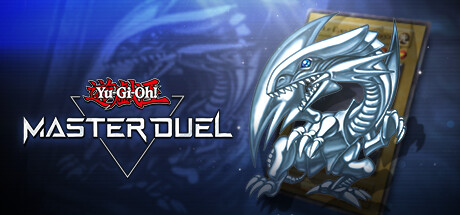
2. Yu-Gi-Oh! Master Duel, best for deep deck-building
Yu-Gi-Oh! Master Duel by Konami brings the full Yu-Gi-Oh competitive format to mobile with no fluff. The card pool is the entire history of the tabletop game, the ranked ladder is real, and the deck-building tutorials are surprisingly accessible for a game with this much rules text. Master Duel vs Pokémon TCG Pocket in 2026 is the steepest jump on this list: more learning curve, more reward, no daily cap on matches.
Where it falls short: New players will spend hours reading card effects before things click. Crafting key cards costs a lot of resources. Match length swings widely depending on archetype.
Pricing:
- Free, generous Gem economy.
- Paid: Optional cosmetic bundles, no pay-to-win packs.
Migrating from Pokémon TCG Pocket: Treat the first week as study. The free starter deck system covers most archetypes, and ranked matchmaking pairs new players with similar accounts.
Download: Aptoide · Google Play · App Store
Bottom line: Pick this if you want the deepest deck-building in mobile TCGs.
3. Hearthstone, best classic with Battlegrounds
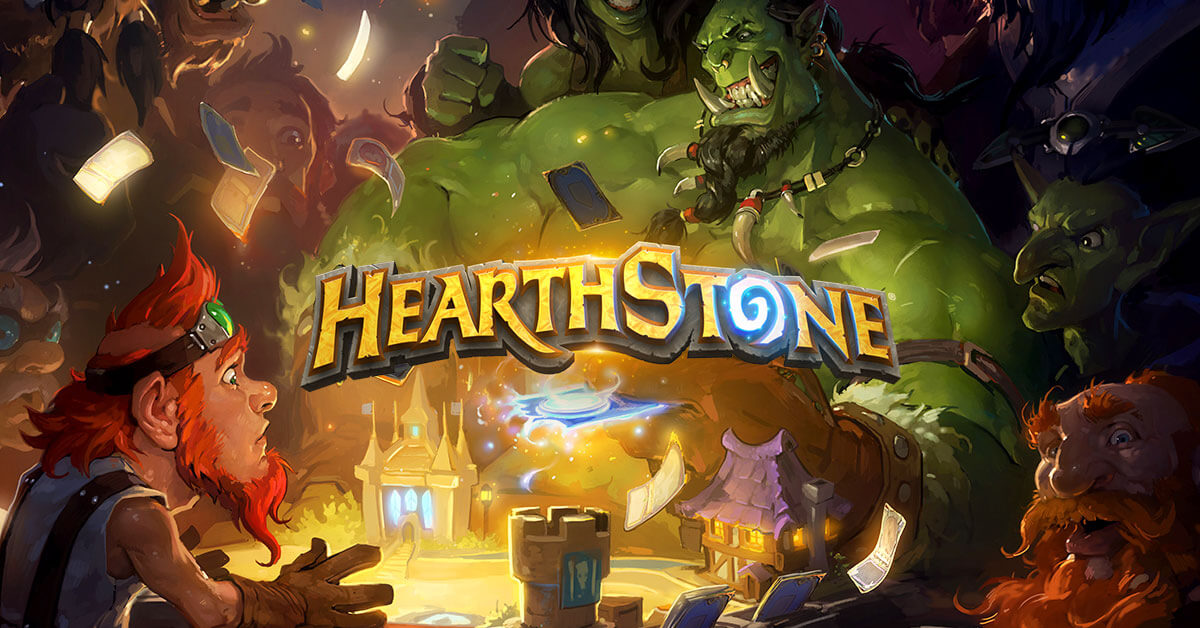
Hearthstone by Blizzard remains the polished classic of digital card games, and the Battlegrounds auto-battler mode that was bolted on years ago has become a reason to keep the app installed on its own. The base game’s standard rotation keeps the meta manageable, and the new player catch-up bundles are friendlier than they used to be. Hearthstone vs Pokémon TCG Pocket in 2026 trades the vertical card pull for a sideways library with a working autobattler attached.
Where it falls short: Premium cosmetic pressure has grown over the years. Expansion costs add up if you want the full pool. Some older modes (Mercenaries, Solo Adventures) feel underbaked.
Pricing:
- Free with generous daily quests and catch-up bundles.
- Paid: Expansions roughly $50 per release, Battlegrounds Perks $19.99 quarterly.
Migrating from Pokémon TCG Pocket: Start with the Standard format and the new player bundle. The Battlegrounds mode is genuinely independent and worth its own session.
Download: Aptoide · Google Play · App Store
Bottom line: Pick this if you want a polished base game plus an autobattler in the same app.
4. Magic: The Gathering Arena, best competitive ladder
Magic: The Gathering Arena is the digital home for Magic’s tournament formats. The ranked ladder maps onto paper Magic’s competitive structure, the deck-building is the longest-running in TCGs, and the BO3 modes give serious players the format they actually want. MTG Arena vs Pokémon TCG Pocket in 2026 is the pick when matches need to feel like actual games of chess, not card pulls.
Where it falls short: The wildcard economy is grindy for new players. Some formats (Alchemy, Historic Brawl) feel underbaked compared to the headline modes. Match length is the longest on this list.
Pricing:
- Free with grindable economy.
- Paid: Mastery Pass $7.49 per set, expansions paid via in-app gems.
Migrating from Pokémon TCG Pocket: Use the new-player track to unlock the core decks. The colour-pie system is the right mental model to learn before opening packs.
Download: Aptoide · Google Play · App Store
Bottom line: Pick this if you want the deepest ranked competitive ladder on mobile.
5. Legends of Runeterra, best free-to-play economy
Legends of Runeterra by Riot has the friendliest economy in the genre by a clear margin. Every card in the game is earnable through play, the weekly vault progression rewards casual play without paywalls, and the recent move to standalone story arcs (Path of Champions) gives single-player options. LoR vs Pokémon TCG Pocket in 2026 is the pick for players who want everything earnable and a mechanically clean deck-builder underneath.
Where it falls short: Player population on PvP ranked has shrunk since the strategic pivot. Some sets feel rushed in card design. Path of Champions monetisation has grown more aggressive over time.
Pricing:
- Free: Every card earnable through play.
- Paid: Path of Champions adventure passes, cosmetic bundles.
Migrating from Pokémon TCG Pocket: The starter quests build a working deck for each region. Two evenings is usually enough to enter ranked play.
Download: Aptoide · Google Play · App Store
Bottom line: Pick this if you do not want to spend money and you want a polished modern card game.
6. Disney Lorcana TCG, best for IP fans
Disney Lorcana TCG is the Disney-themed digital card game built on the same tabletop rules Ravensburger ships in stores. The Polygon piece on Hunny Sage and the Attack of the Vine set lands on the right point: the digital version captures the lighter, friendlier vibe of the tabletop without dropping the strategic spine. Lorcana vs Pokémon TCG Pocket in 2026 trades the Pokémon brand for a friendlier rule set and a meta that rewards midrange play.
Where it falls short: The digital release is newer, so the player base is still growing. Some advanced mechanics arrive with each expansion and lag the tabletop release. Trading is digital-only for now.
Pricing:
- Free with grindable economy.
- Paid: Expansions and cosmetic bundles.
Migrating from Pokémon TCG Pocket: The tutorial covers the lore card mechanic in fifteen minutes. Starter decks for each Ink colour are enough for casual ranked play.
Download: Aptoide
Bottom line: Pick this if the Disney roster is a real draw and you want a midrange-friendly meta.
7. Shadowverse: Worlds Beyond, best for anime depth
Shadowverse: Worlds Beyond is Cygames’s follow-up to the original Shadowverse, and it leans further into the lore-driven, anime-styled approach that built the first game’s audience. The Evolve mechanic from the original makes the jump intact, with new mid-match systems layered on top. Worlds Beyond vs Pokémon TCG Pocket in 2026 trades the Pokémon catalogue for a richer aesthetic and a meta that has rewarded thoughtful play in every season so far.
Where it falls short: New player onboarding moves faster than it should, which can leave the lore feeling thin. Some pre-release archetypes have been rebalanced repeatedly. Cosmetic bundles are aggressive.
Pricing:
- Free with daily quest economy.
- Paid: Card packs, cosmetic bundles.
Migrating from Pokémon TCG Pocket: The new player track unlocks each class’s starter deck. The Evolve mechanic is the only big rule difference and the tutorial covers it well.
Download: Aptoide · Google Play
Bottom line: Pick this if you grew up on anime card games and the original Shadowverse pulled you in.
How to choose
Pick Marvel Snap if you want the closest direct trade for Pocket: short matches, vertical cards, and a real twist.
Pick Yu-Gi-Oh! Master Duel if you want the deepest deck-building on mobile and you are willing to study.
Pick Hearthstone if you want a polished classic with an autobattler attached.
Pick MTG Arena if you want the longest-running competitive format on mobile.
Pick Legends of Runeterra if your priority is a free-to-play economy that respects your time.
Pick Disney Lorcana TCG if the Disney brand is the draw and you want a midrange-friendly meta.
Pick Shadowverse: Worlds Beyond if you want a lore-rich anime card game with a working Evolve mechanic.
Stay on Pokémon TCG Pocket if the daily-friendly pace and the Pokémon brand are exactly the experience you want, and you do not mind the energy timer.
FAQ
Is Marvel Snap better than Pokémon TCG Pocket?
Mechanically deeper at the cost of a steeper meta. Most players who like Pocket’s short-match pacing find Snap immediately. If the Pokémon catalogue is the draw rather than the format, Pocket is harder to replace.
Are there free Pokémon TCG Pocket alternatives that do not push you to pay?
Legends of Runeterra has the most player-friendly economy in the category, with every card earnable through play. Marvel Snap and Yu-Gi-Oh! Master Duel are also generous on the F2P track, with focused crafting making most archetypes attainable.
Which Pokémon TCG Pocket alternative has the largest player base?
Hearthstone and Magic: The Gathering Arena both carry the longest-running active player bases in mobile TCGs. Yu-Gi-Oh! Master Duel is the largest in pure ranked match volume since its launch.
Can I play with my friends in these apps?
Yes. All seven support direct challenges or custom-room play in addition to ranked. Marvel Snap and Lorcana both ship with friendly-match modes that bypass the season pass progression.
What is the best Pokémon TCG Pocket alternative for casual play?
Marvel Snap and Disney Lorcana TCG both keep matches short and rule sets approachable. Lorcana leans more midrange, Snap leans more bluff-and-burst.