The Eurogamer report on ArenaNet’s Mistbound put the genre back in the spotlight. A Guild Wars CCG built around a 5x3 tactical grid, co-published by NCsoft and bilibili for PC and mobile, with no firm release date but a clear “later” window. That announcement is the right excuse to take stock. The shelf of digital CCG card games on PC in 2026 is crowded, with one veteran moving to maintenance mode, one sequel reshaping a long-running brand, and two single-player deckbuilders that have quietly become the most replayed card experiences of the year. We tested 8 of the best TCG card games on PC across Windows, macOS, and Linux to help readers pick the one to install this weekend.
The benchmark was practical: a clean Windows install, a fresh account, the new-player onboarding completed, and a handful of ranked or campaign matches played to gauge how the game treats people without a collection. The 8 below all qualified, and we flag where each one falls short before the credit card comes out.
What to look for in a digital card game
The criteria that matter once the novelty of opening packs wears off:
- Free-to-play fairness. A new account should reach a complete competitive deck in weeks of casual play, not months of grinding or a $100 starter bundle.
- Meta health. The current ranked ladder should reward more than two or three decks. Frequent balance patches and a working ban list are signals worth checking.
- Draft or limited modes. Drafting from a shared pool levels the collection gap and rewards play skill over wallet depth. Arena, Premier Draft, and similar modes are the genre at its purest.
- Single-player content. Adventures, puzzles, and roguelike runs keep the game alive in the years between expansions and serve players who do not want to queue into strangers.
- Deck-building tools. A real in-client deck builder, with filter, search, and import from the community, saves hours over a tab-switching spreadsheet workflow.
- Art and presentation. Card games live or die on whether opening a pack still feels like a small event after three years.
Quick comparison
| Game | Genre | Platforms | Free-to-play | Standout feature |
|---|---|---|---|---|
| Hearthstone | Classic CCG | Windows, macOS, Linux via workarounds | Yes | The deepest single-player suite in the genre |
| Magic: The Gathering Arena | Paper-tied CCG | Windows, macOS | Yes | The actual Magic rules with a working draft client |
| Marvel Snap | Fast lane-based CCG | Windows via official client and cloud | Yes | Three-minute matches that fit any schedule |
| Legends of Runeterra | Spell-chain CCG | Windows, macOS | Yes | Path of Champions roguelike PvE |
| Yu-Gi-Oh! Master Duel | Combo CCG | Windows, macOS via workarounds | Yes | The complete Yu-Gi-Oh card pool in one client |
| Pokémon TCG Live | Paper-tied CCG | Windows, macOS | Yes | Codes from booster boxes mint digital cards |
| Shadowverse: Worlds Beyond | Anime CCG with evolution | Windows | Yes | Super-evolution mechanic and a generous build path |
| Inscryption | Single-player deckbuilder | Windows, macOS, Linux | No | A card game that turns into something else twice |
The 8 best CCG and TCG card games on PC
1. Hearthstone, best for single-player depth
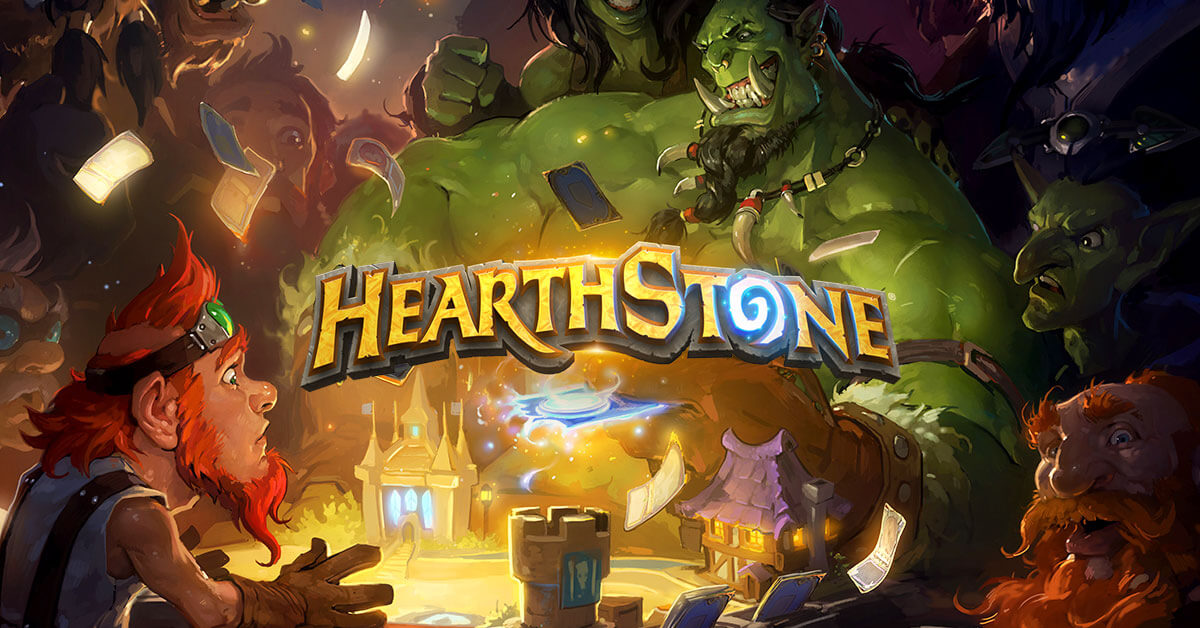
Blizzard’s Hearthstone is still the genre’s incumbent and the easiest entry point for anyone who has never played a digital card game. The board is clean, the animations remain best in class, and the Standard format rotates yearly so the meta never fully calcifies. The single-player side, Solo Adventures, Battlegrounds, and Mercenaries, is the deepest of any game on this list and gives a player years of content without ever queueing into a ranked match.
Where it falls short: New expansions land roughly every four months, and keeping pace in Standard without spending takes daily quest discipline. Battlegrounds Perks and the Tavern Pass are soft paywalls that the design nudges hard.
Pricing:
- Free-to-play: Full game, all modes, slow collection build
- Paid: Tavern Pass around $20 per expansion, Mega Bundle around $80
- Platforms: Windows, macOS, Linux via Lutris with the Battle.net launcher (community-maintained, generally stable)
Download: Hearthstone
Bottom line: The default pick when single-player content matters and the budget is zero.
2. Magic: The Gathering Arena, best for the paper-game faithful
MTG Arena is the only client that plays the actual rules of Magic: The Gathering with a competitive ladder and a working draft queue. Premier Draft and Quick Draft remain the cleanest expression of the genre, since a fresh account with 5,000 gold can sit down at a draft table on the same footing as a veteran. The 2026 Standard rotation pulled in a slimmer card pool that helped meta variance in the first months after each set.
Where it falls short: No macOS-native build, only Windows, and the wildcard economy can punish a player who chases a single archetype across two sets. There is also no Linux client, though Proton handles it.
Pricing:
- Free-to-play: Full game, drafts via earned gold
- Paid: Set Mastery pass around $20, packs at 200 gems each
- Platforms: Windows, macOS via the official native client, Linux via Proton
Download: Magic: The Gathering Arena
Bottom line: The pick for anyone who wants the real Magic rules and a draft queue that runs around the clock.
3. Marvel Snap, best for short sessions
Second Dinner’s Marvel Snap is the game on this list designed for the gap between meetings. Matches are three turns, six locations, and rarely run past four minutes. The PC client landed officially in 2023 and remains the version with the cleanest input. A new account reaches the competitive Infinity rank ceiling in a single season if play is consistent, since collection unlocks scale with the ladder rather than the wallet.
Where it falls short: The Spotlight Cache system, which gates new cards behind a weekly key economy, is divisive and slows access to the strongest archetypes. The lifetime player count has fallen well off its 2023 peak.
Pricing:
- Free-to-play: Full game, all modes, collection grind
- Paid: Season Pass around $10, bundles from $5 to $100
- Platforms: Windows via the official client, macOS via the iOS app on Apple silicon, cloud play via the standard browser stream
Download: Marvel Snap
Bottom line: The pick when a 30-minute lunch break is the entire window for card games.
4. Legends of Runeterra, best for PvE roguelike runs
Riot’s Legends of Runeterra has reshaped itself around Path of Champions, a roguelike PvE mode where champion decks level through bosses, encounters, and a metaprogression layer. Patch 7.6 added the Deep Voice Below the Waves adventure and the Glory Store, both of which gave veteran accounts a clean way to spend the resources they had stockpiled. Constructed PvP still exists, with a smaller but devoted ladder.
Where it falls short: The shift away from PvP-first development means the constructed meta moves more slowly than it once did. A player chasing a competitive ladder will find Hearthstone or Magic deeper.
Pricing:
- Free-to-play: Full game, generous champion grants
- Paid: Champion bundles around $10, cosmetics from $5
- Platforms: Windows, macOS
Download: Legends of Runeterra
Bottom line: The pick for players who want a card game that respects offline-style runs as a first-class mode.
5. Yu-Gi-Oh! Master Duel, best for the full card pool
Konami’s Master Duel is the only digital client that ships the entire competitive Yu-Gi-Oh card pool, from Tribute Summon stalwarts to the modern combo decks that fire 12 cards on turn one. The 2026 banlist updates kept the format from collapsing into a single archetype, and the Road to Worlds campaign that runs through the summer gives ladder play a real stake.
Where it falls short: The new-player wall is the steepest on this list. A turn that involves nine card effects, three chains, and two opponent responses is normal, and the in-client tutorial does not prepare anyone for it. Expect to lean on a community guide.
Pricing:
- Free-to-play: Full game, gem grant tied to events
- Paid: Gem bundles from $1 to $100, no subscription
- Platforms: Windows via the Steam client, macOS via Whisky or CrossOver, no native client
Download: Yu-Gi-Oh! Master Duel
Bottom line: The pick when the appeal is the Yu-Gi-Oh card pool itself, not a clean onboarding curve.
6. Pokémon TCG Live, best for paper-tied collectors
Pokémon TCG Live is the Pokémon Company’s digital companion to the paper game, with a code-card system that mints any booster pack into digital cards. The April 2026 update reshaped the new-player experience, and the Chaos Rising set in May added the Mega Pokémon ex line, including Mega Greninja ex and Mega Floette ex. The client also runs the same rotation as paper Standard, so a collection bought at a local game store is the same collection that plays online.
Where it falls short: The competitive ranked play is shallower than the genre’s leaders, and the client still trails Arena on quality-of-life features like rope timers and replay sharing.
Pricing:
- Free-to-play: Full game, slow collection without codes
- Paid: No direct microtransactions, collection grows via paper code cards
- Platforms: Windows, macOS
Download: Pokémon TCG Live
Bottom line: The pick for anyone already buying paper Pokémon packs who wants the digital companion.
7. Shadowverse: Worlds Beyond, best for anime-style evolution
Cygames retired the original Shadowverse with a server shutdown scheduled for June 30, 2026, and shifted its audience to Shadowverse: Worlds Beyond. The sequel keeps the evolution mechanic that defined the brand and adds super-evolution, a second upgrade tier that turns a mid-game minion into a board-clearing threat. Worlds Beyond is also the most generous on this list for new accounts, with a starter grant that builds two full ranked decks before the first paid pack.
Where it falls short: No macOS or Linux client, only Windows on PC. The single-player content is lighter than Hearthstone’s, though Shadowverse Park gives the client a social hub the genre often lacks.
Pricing:
- Free-to-play: Full game, very generous opening grants
- Paid: Pack bundles around $20, season pass around $10
- Platforms: Windows via Steam
Download: Shadowverse: Worlds Beyond
Bottom line: The pick for the player who liked Hearthstone in 2016 and wants that same generosity on a fresh account in 2026.
8. Inscryption, best single-player card experience
Daniel Mullins’s Inscryption is the outlier on the list and the one we recommend most to people who say they do not like card games. The first act is a cabin-horror roguelike deckbuilder, and the game then mutates twice into something else entirely, with escape-room puzzles, a meta-ARG, and a card pool that keeps shifting under the player. Two of the eight games here are pure single-player, Inscryption and Slay the Spire 2, and Inscryption is the one to play first.
Slay the Spire 2 also deserves a mention. Mega Crit’s sequel hit 500,000 concurrent Steam players in Early Access and remains the strongest pure roguelike deckbuilder on PC. We left it off the main list because it is still in Early Access, with content waves arriving through 2026 and 2027, but it is the second single-player pick for anyone who finishes Inscryption.
Where it falls short: No multiplayer, no live service, no expansion pipeline. Inscryption is a one-shot experience that runs roughly 15 hours and then sits in the library as a thing to recommend.
Pricing:
- Free-to-play: No
- Paid: One-time purchase around $20
- Platforms: Windows, macOS, Linux via Proton (verified on Steam Deck)
Download: Inscryption
Bottom line: The pick when the appetite is for a card game story rather than a queue, a ladder, or a wallet.
How to pick the right one
Start with how the time is going to be spent. A player with 30-minute windows during the workday should install Marvel Snap and ignore everything else on the list. A player who can sit down for two hours on a weekend evening and wants to think hard about lines of play should install Yu-Gi-Oh! Master Duel or Magic: The Gathering Arena. The first rewards memorisation of a vast card pool, the second rewards the cleanest tournament rules in the genre.
For the player who does not want to queue into other humans, the choice is between Hearthstone’s Battlegrounds and Solo Adventures, Legends of Runeterra’s Path of Champions, and the pure single-player picks of Inscryption and Slay the Spire 2. Path of Champions is the closest of these to a traditional card game; Inscryption is the closest to a novel.
Budget matters less than it once did. Every game on the list except Inscryption is free to install, and the new-player grants in Worlds Beyond, Runeterra, and Hearthstone are generous enough that a curious player can sample three of them in a weekend without spending. The real cost is time, and the question worth asking before installing the second client is whether the first one already fills the slot. Most players run one main card game and one single-player chaser, not five at once.
And about Mistbound: ArenaNet’s announcement is exciting because the genre’s best-known designers have not shipped a new entrant in years, not because the game itself is close. Expect early access later in 2026 or in 2027, with a soft launch in select regions first. The shelf above is what to play this weekend.
FAQ
What is the cheapest TCG to start on PC in 2026?
Inscryption at roughly $20 is the cheapest fixed-cost pick, since there is nothing else to buy. Among free-to-play games, Shadowverse: Worlds Beyond gives the most generous starter grant, with enough free cards to build two ranked-viable decks in the first week.
Are any of these single-player friendly?
Yes. Hearthstone Solo Adventures and Battlegrounds, Legends of Runeterra’s Path of Champions, Inscryption, and Slay the Spire 2 in Early Access all play without queueing into another human. Inscryption is the strongest pure single-player pick on the list.
When does Mistbound launch?
ArenaNet, NCsoft, and bilibili have not announced a release date. The game is in early development and is expected later in 2026 at the earliest, with most coverage pointing to 2027 for a wider launch.
Which game has the most active competitive scene in 2026?
Magic: The Gathering Arena and Yu-Gi-Oh! Master Duel hold the largest competitive scenes, each with regular tournament series and a Worlds-style year-end final. Hearthstone Battlegrounds also has a strong competitive layer, separate from constructed ranked.
Do any of these run on Linux?
Inscryption ships a native Linux build and is verified on Steam Deck. Hearthstone, Magic: The Gathering Arena, and Yu-Gi-Oh! Master Duel all run under Proton with community tweaks. Pokémon TCG Live, Legends of Runeterra, and Shadowverse: Worlds Beyond are Windows-first and the Linux experience varies by distribution.
Is Gwent worth installing in 2026?
Gwent remains playable, but CD Projekt shifted it to maintenance mode at the end of 2023. The card pool is frozen, balance is community-voted, and no new content is planned. It is a reasonable pick for anyone who wants a closed, stable meta with no further investment, but we left it off the main list because the genre’s energy has moved on.