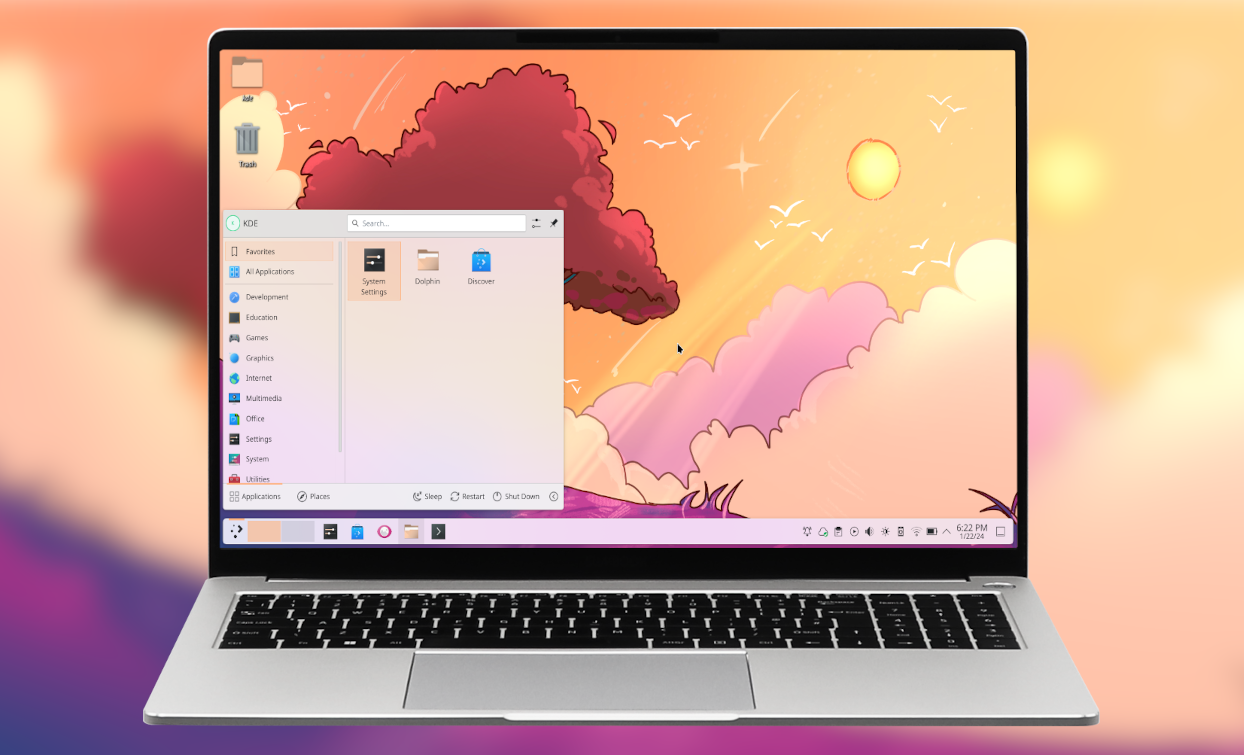
Lively Wallpaper has done a quiet thing for years: shipped a polished animated-wallpaper engine on Windows without a paywall or telemetry, all from a single open-source maintainer. For most people the bundled GIFs, video files, and web wallpapers are enough. The friction shows up at the edges. The Microsoft Store build sometimes lags fresh GitHub releases by a version. There is no Mac or Linux client. The interactive web wallpapers can pull more GPU than expected on older hardware, and the screensaver setup steps are not obvious from the UI. If those are the corners you keep hitting, the Lively alternatives below cover the rest of the design space.
We tested seven Lively Wallpaper alternatives for PC, from the paid Steam standard to free Microsoft Store dynamic themes to widget frameworks that pair with whatever wallpaper you already use.
Quick comparison
| App | Best for | Price | Platforms | Standout feature |
|---|---|---|---|---|
| Wallpaper Engine | Largest community library | $3.99 one-time | Windows | 1M+ Workshop wallpapers |
| Rainmeter | Widgets on top of wallpaper | Free | Windows | Programmable desktop skins |
| ScreenPlay | Cross-platform animated wallpaper | Free, open source | Windows, macOS, Linux | Same UI on all three OSes |
| DesktopHut | Browser-style library | Free | Windows | No installer, browser library |
| Push Video Wallpaper | Reliable video looping | Paid, free trial | Windows | Stable on multi-monitor setups |
| Dynamic Theme | Bing daily wallpaper | Free | Windows | Curated change-per-day |
| WinDynamicDesktop | macOS-style time-of-day | Free, open source | Windows | Wallpaper that follows the sun |
Why people look past Lively Wallpaper in 2026
The complaints surface in the same places year after year: Reddit’s r/Windows11, the Lively GitHub issue tracker, and YouTube comments on Lively review videos.
The Microsoft Store version sometimes runs behind GitHub releases by a feature or two. The standalone installer catches up faster, but new users do not realise there are two distributions, and the wiki entry on the difference is buried.
Lively does not have a built-in marketplace. You can pull web wallpapers from the included sample list or drop files in yourself, but there is nothing like the curated, searchable library that Wallpaper Engine ships with on Steam. People hit the limit fast.
Interactive web wallpapers can use real GPU. Lively pauses playback when a fullscreen game runs, which helps, but desktop multitasking with a heavy WebGL wallpaper running underneath is noticeable on integrated graphics or older laptops.
No macOS or Linux build. Lively-linux exists as a separate exploratory repo but the main project is firmly a Windows app, and ScreenPlay below is the only serious cross-platform option in this list.
Wallpaper Engine
The Steam app most Lively users compare against, and the most active animated-wallpaper community on Windows. The Workshop library has over a million submissions covering anime stills, audio-reactive scenes, interactive web pages, and 3D scenes. Performance is well tuned: it pauses when a game runs, throttles when on battery, and supports multi-monitor with different wallpapers per screen.
Where it falls short: Windows-only, paid (one time, but no free trial), and the Workshop has the usual quality range from breathtaking to broken.
Pricing: $3.99 one-time on Steam. Frequent regional sales bring it lower.
Vs Lively: Bigger library, more polished UI, paid. If you want curated content out of the box and never want to touch GitHub releases, this is the answer.
Download: Steam
Rainmeter
Rainmeter is not a wallpaper engine. It is a desktop customization framework that draws skins, widgets, and visualizers on top of whatever wallpaper you already use. Most Lively-vs-Rainmeter debates miss the point: the two pair well rather than compete. You can keep a Lively animated wallpaper and layer a Rainmeter skin for system stats, music controls, and clocks on top.
Where it falls short: Steep learning curve. Skin quality varies. Rainmeter does not animate the background itself.
Pricing: Free, open source.
Vs Lively: Different category. Use Rainmeter for widgets, Lively for the wallpaper underneath.
Download: rainmeter.net
ScreenPlay
Open-source animated wallpaper engine built with Qt and web technologies, and the only credible cross-platform option in this list. Works on Windows, macOS, and Linux with the same UI. Supports video, GIF, web, and Godot wallpapers. Steam Workshop integration is available for content discovery.
Where it falls short: Smaller community library than Wallpaper Engine. The macOS and Linux builds are newer than the Windows one and still rough on edge cases.
Pricing: Free, open source (GPL).
Vs Lively: ScreenPlay wins on platform reach. Lively wins on Windows polish and lower idle memory.
Download: screen-play.app
DesktopHut
A browser-style library of live wallpapers with a lightweight player. Most people land on DesktopHut for the catalogue, then keep the player installed because it stays out of the way. Not as customizable as Lively or Wallpaper Engine, but easier to start with.
Where it falls short: Library leans heavily into anime and gaming aesthetics. No support for interactive web wallpapers.
Pricing: Free.
Vs Lively: DesktopHut is library-first. Lively gives you more control over import sources, audio reaction, and screensavers.
Download: desktophut.com
Push Video Wallpaper
A paid, narrow tool that does one thing well: loop video files reliably as a desktop background, including on multi-monitor setups where free tools sometimes drift out of sync. Useful for people who already have their own video collection and want a stable player.
Where it falls short: Paid with no free permanent tier. No web or interactive wallpaper support. UI looks dated.
Pricing: Paid one-time license. Free trial available.
Vs Lively: Push is a fallback for users hitting multi-monitor sync issues in Lively. For most setups, Lively does the same job for free.
Download: push-entertainment.com
Dynamic Theme
A small Microsoft Store app that pulls the Bing daily image (or curated NASA, Windows Spotlight, and other sources) and sets it as your wallpaper and lock screen. Not animated, but the change-per-day cadence is the thing people use Dynamic Theme for.
Where it falls short: Static images only. No video, no web, no widgets.
Pricing: Free.
Vs Lively: Dynamic Theme is for users who want curated still photography on a schedule, not animation. Lively does not solve this use case at all.
Download: Microsoft Store
WinDynamicDesktop
A free, open-source port of the macOS time-of-day wallpaper feature: the wallpaper transitions from morning to noon to dusk to night based on your local sunrise and sunset. Works with packaged themes from the community.
Where it falls short: Not animated in the live-video sense. Theme quality and availability vary.
Pricing: Free, open source.
Vs Lively: WinDynamicDesktop covers a specific aesthetic Lively does not. Lively animates per frame; WinDynamicDesktop changes the still image with the sun.
Download: github.com/t1m0thyj/WinDynamicDesktop
How to choose
Pick Wallpaper Engine if the Workshop library matters most and $3.99 is not a constraint. It is the safest default for anyone who wants a polished, popular app and is not allergic to Steam.
Pick ScreenPlay if you live across Windows, macOS, and Linux and want the same wallpaper engine on every machine. It is the only entry here that runs on all three.
Pick Dynamic Theme or WinDynamicDesktop if you do not actually want animation and just want a fresh wallpaper every day. Both are tiny and free.
Pair Rainmeter with whichever wallpaper engine you settle on. The widgets are a separate decision from the animated background.
Stay on Lively Wallpaper if you prefer open-source, do not want a Steam account, and the Microsoft Store cadence works for you. It is still the best free, no-strings option for Windows.
FAQ
Is Wallpaper Engine better than Lively Wallpaper?
Wallpaper Engine has a bigger library and more polish, but it is paid and Windows only. Lively is free, open source, and ships with a thoughtful enough sample set for most people. Quality of life is comparable.
Can I run Lively Wallpaper on macOS?
No native build. Lively is a Windows app built on WinUI 3. ScreenPlay is the closest cross-platform alternative on this list.
Do animated wallpapers use a lot of GPU?
It depends on the wallpaper. Static videos cost very little. Interactive WebGL wallpapers can use 5-15% GPU continuously. Lively and Wallpaper Engine both pause playback when a fullscreen game launches.
What is the closest free Wallpaper Engine alternative?
Lively Wallpaper. It is the most direct free-and-open-source equivalent on Windows. ScreenPlay covers the cross-platform case.
Does Lively Wallpaper work on Windows 11?
Yes. The current Lively build targets Windows 10 1809 and later, which includes every supported Windows 11 release.