XDA called KDE Union a possible fix for Linux theming this month, and the comments turned into the usual desktop-customization arms race. What people actually mean when they say a desktop feels right is that a handful of small apps have been layered on top of it: widgets, tiling window managers, wallpapers that respond to time of day, status bars that show what matters. We tested seven desktop customization apps that make Windows, macOS, and Linux feel like your own.
What to look for in a desktop customization app
- Native surface, not a wrapper. Fake theming that draws over the OS chrome always breaks after the next update. Real customization plugs into the OS.
- Reversible. You should be able to uninstall it without leaving stale registry keys, launchd plists, or GNOME dconf values behind.
- Low idle cost. A tiling manager pinning a CPU core all day is a downgrade from the OS defaults.
- Community themes. The interesting looks come from other users, not the app.
- Documented config. A GUI is fine; a config file you can put in Git is better.
Quick comparison
| App | Best for | Platforms | Free plan | Starting price |
|---|---|---|---|---|
| KDE Plasma | Full desktop environment | Linux | Yes, fully | Free |
| Rainmeter | Widgets on Windows | Windows | Yes, fully | Free |
| Wallpaper Engine | Animated wallpapers | Windows, Linux (Steam) | No | ~$4 one-time |
| Ubersicht | Widgets on macOS | macOS | Yes, fully | Free |
| yabai | Tiling window manager for macOS | macOS | Yes, fully | Free |
| GNOME Tweaks | Deep GNOME tweaks | Linux | Yes, fully | Free |
| Amethyst | Simpler macOS tiling | macOS | Yes, fully | Free |
The 7 best desktop customization apps
1. KDE Plasma, best full desktop environment
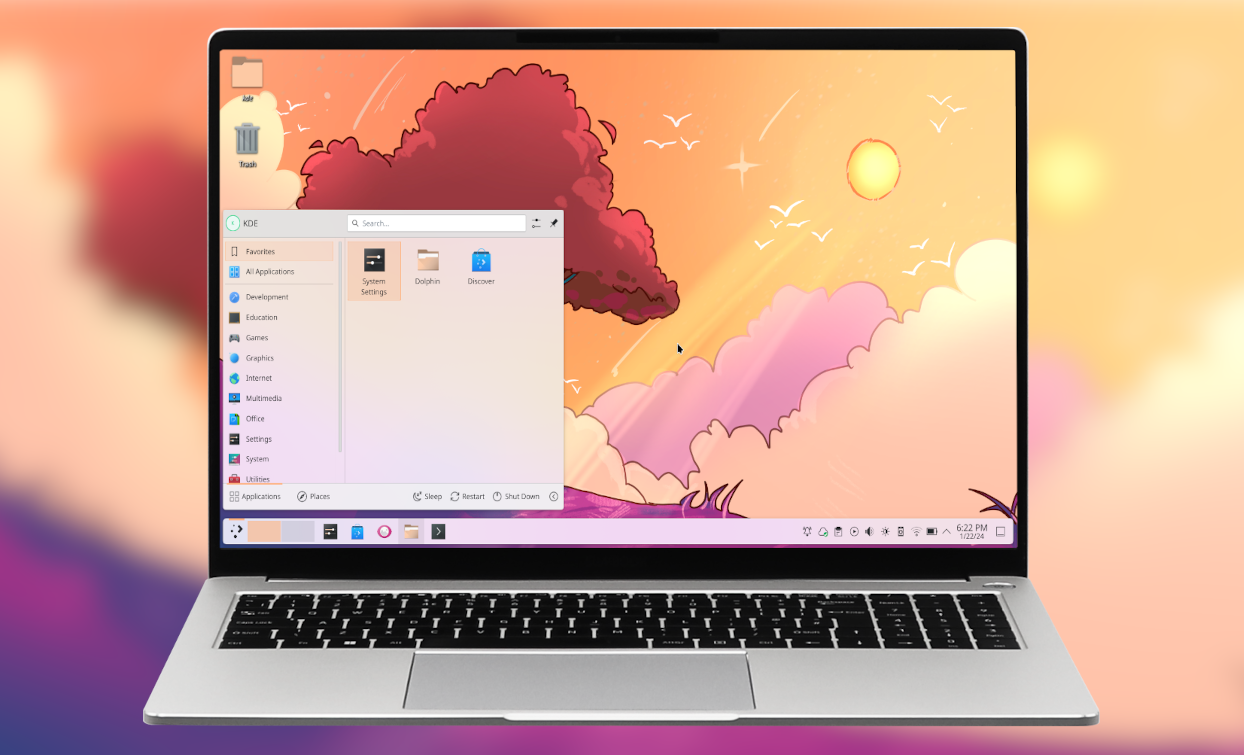
KDE Plasma is what the XDA piece was pointing at. It’s a whole desktop environment where “customization” means the built-in settings rather than a stack of third-party utilities. Panels, widgets, activities, global themes, and window rules all sit in one control panel. Union, the new theming layer that landed with Plasma 7, unifies the look across Qt and GTK apps and takes a long-running Linux annoyance off the table.
Where it falls short: Linux only. New users can drown in options within an hour. Global themes still occasionally clash with GTK apps in edge cases despite Union.
Platforms: Linux (every major distro packages it).
Download: KDE Plasma
Bottom line: The Linux default when you want the desktop itself to be the customization surface.
2. Rainmeter, best widgets on Windows
Rainmeter is the Windows widget engine that has outlasted every Microsoft attempt to replace widgets natively. It draws customizable panels, monitors, launchers, and dashboards on the desktop with almost no idle CPU. The DeviantArt community keeps releasing new skin packs; the Rainmeter subreddit remains one of the more polite corners of the internet.
Where it falls short: Windows only. Skin quality varies, and installing untrusted skins is a trust decision. Some skins hardcode paths that break after Windows updates.
Platforms: Windows 10 and 11.
Download: Rainmeter
Bottom line: The default for Windows users who want widgets and monitors without third-party bloat.
3. Wallpaper Engine, best animated wallpapers
Wallpaper Engine is the paid Steam-distributed app that runs animated, interactive, and 3D wallpapers on Windows and Linux desktops. Users who install it and expect a gimmick tend to leave it installed because the actual power draw is well-tuned and the wallpaper library is vast.
Where it falls short: Costs a few dollars up front. GPU-heavy wallpapers do show up in battery use on laptops.
Platforms: Windows via Steam; Linux via Steam and the Wallpaper Engine Linux beta.
Download: Wallpaper Engine
Bottom line: The pick when a static wallpaper feels too flat and native wallpaper cycling isn’t enough.
4. Ubersicht, best widgets on macOS
Ubersicht is the macOS widget engine that lives on the desktop and renders WebKit-based panels for anything from system monitors to Spotify controls. The widgets themselves are just HTML, CSS, and JS files, so building your own is a matter of an evening.
Where it falls short: Small community compared to Rainmeter. Some widgets abandonware. macOS-only.
Platforms: macOS.
Download: Ubersicht
Bottom line: The default macOS widget engine and the closest analog to Rainmeter.
5. yabai, best tiling on macOS
yabai is the tiling window manager that turns macOS into something that looks and behaves like a minimalist Linux window manager. Pair it with skhd for keyboard control and you have a keyboard-driven workflow that stays out of the way. Users who install it stop reaching for the mouse for window management.
Where it falls short: Requires disabling System Integrity Protection partially for the full feature set. The setup process is a lift.
Platforms: macOS.
Download: yabai
Bottom line: The pick for keyboard-first macOS users willing to spend an afternoon on the setup.
6. GNOME Tweaks, best deep GNOME configuration
GNOME Tweaks is the utility that exposes the options GNOME hides in its default Settings app. Fonts, animations, extension management, application startup, top-bar behavior, and mouse acceleration all sit in a single window. Every serious GNOME user has it installed within the first week.
Where it falls short: GNOME only. Some tweaks conflict with GNOME extensions and require careful ordering.
Platforms: Linux (any distro that ships GNOME).
Download: GNOME Tweaks
Bottom line: The mandatory add-on for GNOME users. Install first, tweak forever.
7. Amethyst, best simpler macOS tiling
Amethyst is the tiling manager for macOS users who liked the yabai idea but not the SIP tradeoff. It doesn’t need any system modifications and delivers roughly two-thirds of yabai’s tiling capability with a fraction of the setup effort. That trade is right for a lot of people.
Where it falls short: No transparent focus follows mouse. Some layouts are harder to configure than in yabai.
Platforms: macOS.
Download: Amethyst
Bottom line: The macOS tiling pick when the yabai setup effort isn’t worth it.
How to pick the right one
- On Linux, start with the desktop itself: KDE Plasma if you want customization to feel first-class, GNOME plus GNOME Tweaks if you want minimalism plus adjustment.
- On Windows, add Rainmeter first, then Wallpaper Engine if you want a livelier desktop.
- On macOS, add Ubersicht for widgets and pick yabai or Amethyst for tiling. Amethyst is the safer default.
- Whichever OS you’re on, avoid theme-injection tools that draw over system chrome. They break after every OS update and are the single most common source of “why is my desktop weird” support threads.
FAQ
What is the best free desktop customization app?
Rainmeter on Windows, KDE Plasma on Linux, and Ubersicht plus Amethyst on macOS are the free defaults that cover the widget and window-management basics. All four are actively maintained, none require a subscription, and all have healthy community catalogs to draw from.
Does KDE Union work on Windows or macOS?
No. KDE Union is a Linux theming layer for KDE Plasma. It doesn’t touch Windows or macOS. Windows users looking for cross-app theme consistency are stuck with third-party tools that are riskier than Union.
Can Wallpaper Engine run on Linux?
Yes, via Steam’s Wallpaper Engine Linux beta. Support has improved over the last year, particularly on KDE Plasma and X11. Wayland compositors have partial support that varies by compositor.
Is yabai safe to install?
Yes, but full functionality requires disabling System Integrity Protection partially, which is a real security trade. Read the documented steps carefully. Amethyst avoids this trade and delivers most of the same behavior.
Do desktop customization apps slow down my computer?
Well-designed ones are near-zero idle cost. Rainmeter, Ubersicht, and GNOME Tweaks all sit at negligible CPU when there’s nothing to update. Animated wallpapers and aggressive widget refresh rates are where the cost shows up; tune them if battery life matters.