Reports on Xbox’s latest round of studio cuts put OD, Hideo Kojima’s next horror project, on the chopping block more than once. It survived. The project is real, still in development, and still years from a release date. That leaves a gap for anyone who wants the same slow-burn dread OD is promising: quiet corridors, a sense that something is wrong before anything actually happens, and a story that lingers after the credits roll. We picked eight desktop games that already deliver that kind of atmospheric horror, from underwater sci-fi to a haunted painter’s studio, so the wait for OD has something to fill it.
What makes atmospheric horror work
Atmospheric horror leans on pacing more than shock. The best games let silence stretch, then break it with a sound cue instead of a monster jumping into frame. Environmental storytelling does the heavy lifting: a scattered room, a logbook, a smear on the wall tells the player more than a cutscene would. Restraint matters too. Games that save their scares for a handful of set pieces hit harder than ones that throw a jump scare every five minutes. Underneath the scares, the strongest entries carry existential themes, questions about identity, consciousness, or what survives after the body doesn’t, and they earn their endings instead of just stopping. A good ending recontextualizes everything that came before it.
Quick comparison
| Game | Best for | Length (hrs) | Combat? | Standout feature |
|---|---|---|---|---|
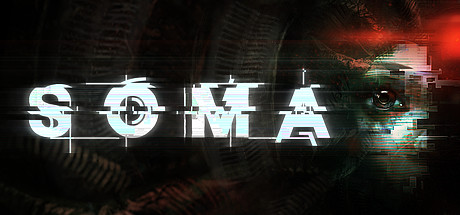
| SOMA | Existential sci-fi horror | 10 | Minimal, mostly avoidance | Underwater setting and a story about consciousness |
| Amnesia: The Dark Descent | Classic hide-and-run horror | 8 | None, sanity system instead | The genre-defining darkness and sanity mechanic |
| Signalis | Retro survival horror | 8 | Light, resource-limited | PS1-style visuals with a grief-driven story |
| Layers of Fear | Psychological walking horror | 5 | None | Rooms that rearrange themselves as you walk |
| Alien: Isolation | Sustained predator tension | 16 | Limited, mostly stealth | A single Xenomorph that actually hunts you |
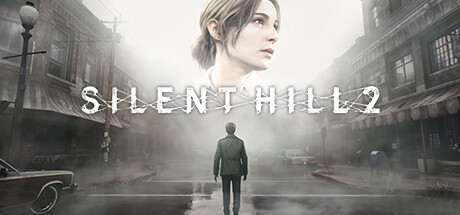
| Silent Hill 2 | Character-driven psychological horror | 10 | Light, deliberately clumsy | A 2024 remake that keeps the original’s dread intact |
| Resident Evil Village | Horror with action leaning | 10 | Moderate to heavy | Gothic castle setting and a strong opening act |
| Observation | Sci-fi puzzle horror | 6 | None | Playing as the station’s AI instead of a human |
The 8 best atmospheric horror games for desktop
1. SOMA: best for existential sci-fi horror
SOMA drops players into an underwater research station after civilization has already ended, and spends ten hours asking what actually makes someone a person. Frictional Games built the combat around avoidance rather than confrontation, so tension comes from environment and dialogue rather than a weapon. The ending is one of the most discussed in the genre for good reason.
Where it falls short: The lack of any real combat option can frustrate players who want more agency during threats.
Pricing: Around $29.99 on Steam, frequently discounted.
Platforms: Windows, macOS, Linux.
Download: Steam
Bottom line: The best starting point for anyone who wants horror built around ideas rather than encounters.
2. Amnesia: The Dark Descent, best classic hide-and-run horror
Amnesia: The Dark Descent set the template that most modern atmospheric horror still follows. Players have no weapons, only a lantern and a sanity meter that punishes staring too long into the dark. Frictional’s sound design carries most of the fear, footsteps, groans, and the creak of a castle that seems to be alive.
Where it falls short: The graphics and animation show their age next to the studio’s later work, including SOMA and The Bunker.
Pricing: Around $19.99 on Steam, often bundled at a discount.
Platforms: Windows, macOS, Linux.
Download: Steam
Bottom line: Still the reference point for hide-and-run horror over a decade later.
3. Signalis: best retro survival horror
Signalis wraps a grief-driven story about a replika searching for her lost partner inside a PS1-era visual style, limited inventory space, and top-down exploration that recalls early Resident Evil and Silent Hill. Rose-Engine, a two-person studio, built a world that rewards close reading of documents and environmental detail over combat skill.
Where it falls short: Resource management is tight enough that new players may reload saves often during the middle stretch.
Pricing: Around $19.99 on Steam.
Platforms: Windows, playable on Linux via Proton.
Download: Steam
Bottom line: The strongest retro-styled survival horror release in years, built by a tiny team with a clear vision.
4. Layers of Fear: best psychological walking horror
Layers of Fear follows a painter descending into madness while finishing a final masterpiece, and it uses that premise to justify rooms that shift and reconfigure the moment a player looks away. Bloober Team leans entirely on environmental storytelling and disorientation rather than combat or chase sequences.
Where it falls short: With no combat and a linear path, it plays closer to an interactive story than a game with mechanical depth.
Pricing: Around $19.99 on Steam.
Platforms: Windows, macOS, Linux.
Download: Steam
Bottom line: A short, tightly focused pick for players who want atmosphere over gameplay systems.
5. Alien: Isolation, best sustained predator tension
Alien: Isolation puts players aboard a decaying space station with a single Xenomorph that learns from player behavior and hunts accordingly. Creative Assembly stretches that premise across fifteen-plus hours without it losing tension, mostly by keeping the player weak: a motion tracker and hiding spots are the main tools, not weapons.
Where it falls short: The length works against it in the back half, and some players find the difficulty spikes uneven.
Pricing: Around $19.99 on Steam, with a DLC bundle available separately.
Platforms: Windows, macOS, Linux.
Download: Steam
Bottom line: The best predator-driven horror game on desktop, full stop.
6. Silent Hill 2: best character-driven psychological horror
Silent Hill 2, Bloober Team’s 2024 remake, rebuilds the 2001 original with an over-the-shoulder camera and modern combat while keeping James Sunderland’s descent into the fog-covered town intact. The story about grief and self-deception still lands, and the new visual fidelity makes the town’s decay more unsettling rather than less.
Where it falls short: Combat feels deliberately clumsy, which some longtime fans read as faithful and others read as clunky.
Pricing: Around $69.99 on Steam.
Platforms: Windows.
Download: Steam
Bottom line: The remake that finally makes the original’s reputation make sense to a new audience.
7. Resident Evil Village: best horror with action leaning
Resident Evil Village trades some of Resident Evil 7’s claustrophobia for a gothic castle setting, an over-the-shoulder camera, and combat that shows up more often than in the rest of this list. The opening village and castle sections still deliver genuine dread before the pace shifts toward action in the back half.
Where it falls short: The second half leans hard into combat and set pieces, which breaks the slow-burn tone the opening builds.
Pricing: Around $29.99 on Steam, frequently discounted, with a Gold Edition bundling the Winters’ Expansion.
Platforms: Windows.
Download: Steam
Bottom line: The pick for players who want atmosphere but don’t want to give up combat entirely.
8. Observation: best sci-fi puzzle horror
Observation flips the usual horror perspective by casting the player as SAM, the station’s AI, watching and assisting a lone astronaut after something goes wrong aboard the orbital station. No Code builds dread through camera control, limited information, and a slow reveal of what actually happened, closer to a HAL-9000 story told from HAL’s side.
Where it falls short: The unconventional camera and puzzle-first structure take real adjustment, and some players never fully settle into it.
Pricing: Around $19.99 on Steam.
Platforms: Windows, macOS.
Download: Steam
Bottom line: The most original perspective on this list, and a short enough runtime to finish in one or two sittings.
How to pick the right one
Start with how much combat capability matters. SOMA, Amnesia, Layers of Fear, and Observation strip it out almost entirely, which keeps tension high but limits player agency during threats. Alien: Isolation and Silent Hill 2 give a little more room to fight back without turning into action games. Resident Evil Village sits furthest toward action, better for players who want atmosphere paired with real combat systems.
Length is the next filter. Layers of Fear and Observation both finish in a single extended sitting, useful for a weekend rather than a multi-week commitment. Alien: Isolation runs the longest by a wide margin, so it rewards players who want to stay in one world for a while.
If the goal is specifically to sit with the same kind of dread OD is aiming for, SOMA and Signalis lean hardest into existential and identity-driven themes rather than jump scares. If gothic setting and visual craft matter more, Silent Hill 2 and Resident Evil Village both deliver strong art direction backed by real production budgets.
FAQ
Is OD actually still in development? Yes. Reports of Xbox’s studio cuts raised questions about the project’s status, but Kojima Productions has confirmed OD remains active. No release date has been set.
Which of these games is the scariest? Amnesia: The Dark Descent and Alien: Isolation consistently rank as the most tense in player surveys, mostly because both remove the player’s ability to fight back. SOMA and Signalis lean more unsettling than jump-scare heavy.
Do any of these run well on Steam Deck? SOMA, Amnesia: The Dark Descent, Signalis, Layers of Fear, and Alien: Isolation all run well through Proton. Silent Hill 2 and Resident Evil Village are playable but less consistently verified for handheld performance.
Which one should a horror newcomer start with? Layers of Fear or Observation. Both are shorter, have no combat to learn, and rely on atmosphere rather than difficulty.
Are any of these connected to the same universe or story? No. Each game on this list is a standalone story from a different studio. The throughline is tone and pacing, not shared lore.
Is Resident Evil Village too action-heavy to count as atmospheric horror? The opening hours qualify fully, with slow exploration and a genuinely dreadful castle sequence. The back half shifts toward combat, which is why it ranks lower on tension than the rest of the list despite strong production values.