Hideo Kojima keeps drip-feeding details about OD, his Xbox-published horror project, and the latest line is that the game is built to test fear thresholds. Whatever OD turns out to be, the wait is years long. The good news is that PC already has a deep bench of psychological horror that does exactly what Kojima is describing: works on you slowly, rewires what feels safe, and trusts dread over a sudden loud noise.
We played through the current shortlist and ranked the seven best psychological horror games on PC for 2026. The top pick is the Silent Hill 2 remake, which dropped in late 2024 and remains the strongest single entry in the genre right now. The rest of the list covers every flavour of dread we could think of: existential sci-fi, religious cult chase horror, haunted-house sanity systems, and the most cinematic narrative horror Remedy has ever shipped.
What separates psychological horror from jump-scare horror
Jump-scare horror works on reflex. A door slams, a face appears, your heart rate spikes for two seconds, and then it resets. Psychological horror works on the part of your brain that you can’t reset. It builds atmosphere through sound design, environmental composition, and pacing that refuses to release tension when you expect it to. The fear sticks because the game has spent hours making you doubt what you are looking at.
The mechanics back this up. Sanity meters, unreliable narrators, restricted player power, and combat systems that punish aggression all push you into a defensive crouch. You start playing more cautiously than the game requires, which is the point. The genre’s best entries also handle silence well. Long stretches with no music, no enemies, just the sound of your own footsteps, are scarier than any monster cue because your imagination fills the gap.
Quick comparison
| Game | Best for | Length (h) | Combat? | Price (approx.) |
|---|---|---|---|---|
| Silent Hill 2 (2024) | Strongest single pick on the list | 15-20 | Yes, deliberate | ~$70 |
| SOMA | Existential sci-fi dread | 10-12 | Avoidance only | ~$30 |
| Visage | Pure haunted-house atmosphere | 12-15 | None | ~$30 |
| Outlast 2 | Fast-paced chase tension | 8-10 | None, camcorder only | ~$30 |
| Amnesia: The Dark Descent | Genre reference point | 8-10 | None | ~$20 |
| Resident Evil 7: Biohazard | Survival horror bridge | 10-12 | Yes, scarce ammo | ~$30 |
| Alan Wake 2 | Cinematic narrative horror | 18-22 | Yes, light-based | ~$60 |
The 7 best psychological horror games on PC in 2026
1. Silent Hill 2 (2024) -- Best overall pick
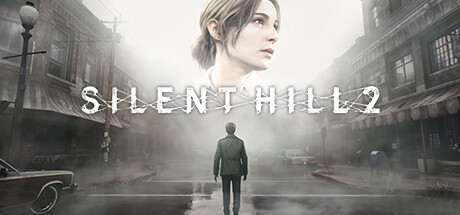
Silent Hill 2 (Bloober Team / Konami, October 2024) is the remake of the 2001 game most critics still call the genre’s high-water mark. James Sunderland returns to the foggy town of Silent Hill chasing a letter from his dead wife, and what unfolds is the kind of slow, symbolic horror that very few games attempt and almost none execute. The remake keeps the original’s structure while rebuilding combat, presentation, and audio for modern hardware. Akira Yamaoka returned to rework the score, which is a large part of why the dread lands so consistently.
Bloober Team had something to prove with this one after a string of uneven projects, and the result is the studio’s clear best work. The town feels lived-in and wrong in the same breath, and the boss encounters retain the psychosexual weight that made the original so studied.
Where it falls short: Performance on lower-end PCs has been uneven, and the game leans heavily on dense fog effects that can tax mid-range hardware. Some side rooms can feel padded compared to the tighter original.
Pricing: Around $70 on Steam. No free tier. Occasional sales bring it closer to $50.
Platforms: Windows.
Download: Steam
Bottom line: The single strongest psychological horror game you can buy on PC right now. If you only play one game on this list, play this one.
2. SOMA -- Best for existential dread over jump scares
SOMA (Frictional Games, 2015) is an underwater sci-fi horror game from the studio behind Amnesia, and it has aged into one of the genre’s most quietly devastating entries. You wake up in a decaying research facility at the bottom of the Atlantic, and the questions the game asks about identity, continuity, and what it means to be conscious are the actual horror. The monsters are scary, but the conversations are what stay with you.
Frictional released a Safe Mode option after launch that lets enemies wander the world without ever killing the player. It sounds like a concession, but it works. The dread comes from the writing, not the failure states.
Where it falls short: The stealth sections are the weakest part of the game and can feel repetitive. Players who need combat as an outlet for tension will find the avoidance-only design frustrating.
Pricing: Around $30 on Steam. No free tier. Frequently discounted below $10.
Platforms: Windows, macOS, Linux.
Download: Steam
Bottom line: Pick this if you want a horror game that will linger because of what it made you think about, not because of what jumped out of a closet.
3. Visage -- Best for pure haunted-house atmosphere
Visage (SadSquare Studio, 2020) is the closest anyone has come to delivering what PT promised before Konami pulled it. You wander a sprawling suburban house where multiple families have died, and the house responds to your presence. Doors close behind you. Objects move. The lighting shifts in ways that are almost imperceptible until you realise the room you walked into is not the room you left.
The sanity system is unusual: instead of a meter, sanity is managed through small rituals like taking pills, smoking cigarettes, and staying in lit areas. Run out and the house gets worse. Combat does not exist. You hide, you run, you ration matches.
Where it falls short: The chapter structure can feel obtuse without a guide, and some puzzle solutions require interactions the game does not telegraph clearly. It is also genuinely long for a horror game without combat, which not everyone wants.
Pricing: Around $30 on Steam. No free tier.
Platforms: Windows.
Download: Steam
Bottom line: The best haunted-house experience on PC. Play with headphones and the lights off.
4. Outlast 2 -- Best for high-tension chase horror
Outlast 2 (Red Barrels, 2017) trades the asylum of the first game for the deserts and cornfields of rural Arizona, where a religious cult and its splinter sect are at war. You play Blake Langermann, a journalist with a camcorder and no weapons. The night-vision lens you film through is also the only way to see in dark areas, which forces a constant trade-off between battery life and visibility.
This is the most pure-tension entry on the list. Long sections are unbroken chase sequences where stopping for breath is not an option. The religious imagery is genuinely disturbing in a way that has dated better than expected, and the late-game shifts between the cult and Blake’s traumatic memories are the strongest writing the studio has done.
Where it falls short: The narrative finale is divisive and leaves several threads deliberately unresolved. Some chase sequences require precise trial-and-error routing that can interrupt the pacing.
Pricing: Around $30 on Steam. No free tier. Often under $10 on sale.
Platforms: Windows, macOS, Linux.
Download: Steam
Bottom line: Pick this when you want horror that does not let you catch your breath, and you are comfortable with no combat at all.
5. Amnesia: The Dark Descent -- Best genre reference point
Amnesia: The Dark Descent (Frictional Games, 2010) is the game most modern psychological horror traces back to. You wake up in a Prussian castle with no memory and a note from your past self telling you what you need to do. The sanity meter drops when you look at monsters or stand in the dark for too long. There are no weapons. Hiding and running are the entire combat system.
A decade and a half later, the design choices that felt radical at launch have been copied so widely that some of the original’s tricks read as familiar. Even so, the writing and sound design hold up, and the late-game escalation is still one of the best paced runs in the genre.
Where it falls short: The graphics show their age, even on the remastered version. Some puzzle solutions assume an older convention of adventure-game logic that newer players may find obscure.
Pricing: Around $20 on Steam. No free tier. Routinely under $5 on sale.
Platforms: Windows, macOS, Linux.
Download: Steam
Bottom line: The game everyone else on this list is in conversation with. Worth playing if you somehow haven’t.
6. Resident Evil 7: Biohazard -- Best survival horror crossover
Resident Evil 7: Biohazard (Capcom, 2017) is the entry that pulled the Resident Evil series back to its survival horror roots after the action-heavy direction of RE5 and RE6. The shift to first-person and the claustrophobic Louisiana plantation setting reframed the series as a psychological horror experience, even with combat and inventory management intact. The Baker family is one of the most memorable horror antagonists of the last decade.
The game also runs well on a wide range of hardware and has full VR support on PSVR2 and via mods on PC, which remains one of the most intense ways to play any horror game.
Where it falls short: The midgame ship section is widely considered the weakest part of the campaign. The final boss leans into action territory in a way that contrasts with the careful pacing of the opening hours.
Pricing: Around $30 on Steam. No free tier. Frequently around $8 on sale.
Platforms: Windows.
Download: Steam
Bottom line: The bridge between classic survival horror and modern psychological horror. Pick this if you want to fight back occasionally without losing the dread.
7. Alan Wake 2 -- Best cinematic narrative horror
Alan Wake 2 (Remedy Entertainment, 2023) is the most cinematic horror game on PC, and one of the most ambitious narrative projects of the last several years. The game splits its story between Saga Anderson, an FBI agent investigating ritual murders in the Pacific Northwest, and Alan Wake, a writer trapped in a dark dimension that warps to match his manuscript. The two storylines interlock, and the live-action footage Remedy weaves into key sequences is genuinely unsettling rather than gimmicky.
Combat uses light as a weapon, and ammunition is scarce enough that every encounter feels deliberate. The Mind Place and Writers Room mechanics reward players who pay attention to detail and reread their notes. The DLCs (Night Springs and The Lake House) add several more hours and tie back into the broader Remedy Connected Universe.
Where it falls short: Alan Wake 2 is not on Steam at all. It is exclusive to the Epic Games Store on PC, which is a non-starter for some players. The hardware requirements are also among the highest on this list.
Pricing: Around $60 on Epic Games Store. No free tier. The Deluxe Edition with DLCs is closer to $80.
Platforms: Windows.
Download: Epic Games Store
Bottom line: The most narratively ambitious horror game on PC right now. Pick this if you want a cinematic, writer-led horror story and you don’t mind Epic.
How to pick the right one
Pick Silent Hill 2 (2024) if you want the single strongest psychological horror game on PC right now. Everything else on this list is a recommendation for a specific mood; this one is the default answer.
Pick SOMA if you want horror that operates on ideas rather than monsters. The Safe Mode option also makes it the easiest entry point for players who normally avoid the genre.
Pick Visage if the haunted-house mood is the entire reason you play horror. It is also the closest substitute for PT that exists.
Pick Outlast 2 if you want sustained, pulse-elevating chase tension and you don’t need combat to feel in control.
Pick Amnesia: The Dark Descent if you have not played the foundational entry, or if you want the cheapest pick on the list during a sale.
Pick Resident Evil 7: Biohazard if you want survival horror with combat as an outlet, and a setting that holds together better than most cinematic horror films.
Pick Alan Wake 2 if narrative ambition and presentation matter to you most, and you are open to buying outside Steam.
If you are new to the genre, start with SOMA or Resident Evil 7. If you are a veteran, Silent Hill 2 and Alan Wake 2 are the two unmissable entries from the last three years.
Frequently asked questions
What is the scariest psychological horror game on PC right now?
By consensus, Visage. The combination of no combat, an unpredictable house, and a sanity system that punishes carelessness produces the most sustained fear response of any game on this list. Silent Hill 2 is more affecting; Visage is more frightening in the moment.
Are any of these games free?
None of the seven have a free tier. Amnesia is the cheapest and routinely drops under $5. Outlast 2 and SOMA both regularly appear in bundles or under $10. Alan Wake 2 has held its price closer to launch.
Is the Silent Hill 2 remake faithful to the original?
The structure, cast, and core themes are preserved. Combat and presentation have been rebuilt. Akira Yamaoka returned for the score. Long-time fans of the 2001 game have been broadly positive about the remake, with most disagreements centring on specific scene staging rather than the overall direction.
Can these games be played on Steam Deck?
Resident Evil 7, SOMA, Outlast 2, and Amnesia are all Verified or Playable on Steam Deck. Silent Hill 2 (2024) and Visage run but require lowered settings. Alan Wake 2 is not on Steam and is unsupported on Steam Deck.
What about Layers of Fear or Phasmophobia?
Layers of Fear (2016) was a strong art-driven entry but has been superseded by its 2023 reimagining and is starting to show age. Phasmophobia is excellent but sits closer to investigative co-op horror than the solitary dread the rest of this list shares.
Is OD by Hideo Kojima out yet?
No. OD is in active development under Kojima Productions with Xbox publishing. No release window has been confirmed. The games on this list are what to play while waiting.