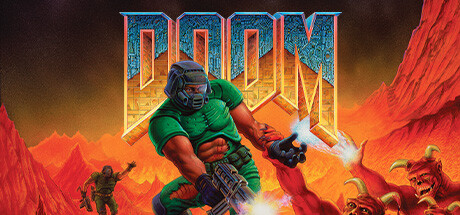
The death of DOOM composer Bobby Prince sent a wave of players back to E1M1. The soundtrack was half of why the original game still feels electric in 2026, and his loss reminded the genre’s audience that nothing else has ever played quite the same way. If the trip back to the 1993 shareware made you want more, the DOOM alternatives below cover both the boomer-shooter classics that shipped alongside it and the modern revival that has produced some of the best first-person action games of the decade.
We played seven DOOM alternatives across Windows, macOS, and Linux. Each one takes a different slice of what made DOOM matter (speed, level design, weapon feel, soundtrack) and runs with it.
Why people still hunt for DOOM alternatives in 2026
The original DOOM and DOOM II remain great, but specific itches send players elsewhere:
- No native co-op outside of source ports. Vanilla DOOM doesn’t ship with online multiplayer. Modern alternatives bake it in.
- Limited modern controls. DOOM is on rails, vertically. Mouselook is a source-port feature, not a default. Players who never grew up with it find the original stiff.
- No vertical level design. Heights matter less in DOOM than in Quake or modern boomer shooters. The map design rewards horizontal speed more than aerial play.
- Soundtrack is the soundtrack. Bobby Prince’s MIDI is irreplaceable, and that’s exactly the issue. Players who finished every track want something else with the same energy.
- Steam version is the enhanced re-release. It looks and runs great, but purists who want vanilla executable behavior end up at Chocolate Doom or Crispy Doom anyway.
The alternatives below split into classics that shipped near DOOM and modern revivals that built on what it taught.
Quick comparison
| Game | Best for | Era | Price | Standout feature |
|---|---|---|---|---|
| Quake (Remastered) | Faster pace, true 3D | 1996 | $9.99 | Trent Reznor soundtrack, true vertical play |
| DOOM Eternal | Modern DOOM cranked to 11 | 2020 | $39.99 | Glory Kill loop, platforming-as-combat |
| DUSK | Throwback shooter, 1996 vibe | 2018 | $19.99 | Hand-crafted level design, hub world |
| ULTRAKILL | Style-meter combat at 1000fps | 2020 | $24.99 | Combo system, parry mechanic |
| Heretic | Fantasy DOOM with potions | 1994 | $5.99 | Inventory items, vertical aiming |
| Duke Nukem 3D | Interactive levels, attitude | 1996 | $9.99 | Destructible environments |
| Prodeus | Modern retro with deathmatch | 2022 | $24.99 | Polished campaign plus level editor |
The 7 best DOOM alternatives for desktop
Quake (Remastered) — best for true vertical play
Quake is the natural next stop after DOOM. id Software’s 1996 release moved the engine to true 3D, the levels added vertical play that DOOM never had, and the soundtrack by Trent Reznor and Aubrey Hodges established a different mood entirely. The 2021 enhanced edition runs on modern hardware, ships add-on episodes by MachineGames and Wolfenstein-era id veterans, and supports keyboard, mouse, and controller cleanly.
Where it falls short: The brown palette is divisive. The smaller enemy roster compared to DOOM II shows in the back half of the campaign.
Pricing:
- Steam: $9.99 base, frequent sales near $4.99
- vs DOOM: similar price, true 3D adds vertical level design
Download: Quake on Steam
Bottom line: The first stop after DOOM. The remaster makes it painless to play in 2026.
DOOM Eternal — best modern DOOM cranked to 11
DOOM Eternal is what DOOM 2016 promised and then doubled. Combat is a high-speed loop of glory kills, chainsaw fuel, flame belch, and resource economy, and the levels include real platforming sections between fights. The Mick Gordon soundtrack carries the same intensity Bobby Prince brought to E1M1, in a thoroughly modern shape.
Where it falls short: The mid-game asks you to manage four resources at once. If you wanted casual DOOM, this is not it. The recent removal of Denuvo helped Linux compatibility, but Bethesda’s launcher era left some friction.
Pricing:
- Steam: $39.99 base, $59.99 Deluxe with DLC
- vs DOOM: more expensive, much heavier combat loop
Download: DOOM Eternal on Steam
Bottom line: The right pick when you want DOOM’s pace with 2020s production values. Steam Deck Verified.
DUSK — best modern throwback
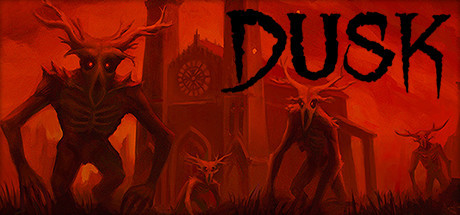
DUSK from David Szymanski looks like it could have shipped in 1996, plays like a love letter to Quake and Blood, and proves that hand-crafted level design beats every procedurally generated arena shooter that has come since. The three episodes layer atmosphere on top of pure speed, the soundtrack by Andrew Hulshult is one of the best in the modern revival, and the hub world stitches the campaign together cleanly.
Where it falls short: The horror tone is divisive. The middle episode dips in pace.
Pricing:
- Steam: $19.99, regular sales near $9.99
- vs DOOM: pricier, modern release with one developer at the helm
Download: DUSK on Steam
Bottom line: The most direct heir to DOOM in spirit. Native Linux build runs on Steam Deck without changes.
ULTRAKILL — best for style-meter combat
ULTRAKILL is what happens when you cross DOOM Eternal’s combat loop with a Devil May Cry style meter. The player is a cybernetic V1, weapons feed each other, parrying enemy projectiles restores health, and the entire game runs at framerates that make the action read like animation. The early-access build through 2025 grew into a near-complete game with deeply replayable acts.
Where it falls short: Still officially early access at time of writing. Skill ceiling is high, learning curve is steep.
Pricing:
- Steam: $24.99
- vs DOOM: more expensive, depth-of-mechanics rewards practice
Download: ULTRAKILL on Steam
Bottom line: The pick for players who want their old-school FPS to read like a fighting game. Linux native, Steam Deck Verified.
Heretic — best fantasy take
Heretic is id Software’s other 1994 shooter, built on the DOOM engine with a fantasy reskin and one significant mechanical addition: an inventory of usable items (potions, wings of wrath, tomes of power). The campaign feels familiar in pacing and weapon balance, but the verticality through the levels and the inventory pressure change how each room plays.
Where it falls short: Story is paper-thin even by 1994 standards. Replay loop is closer to DOOM than to a modern game.
Pricing:
- Steam: $5.99 base, frequently bundled
- vs DOOM: cheaper, same engine, magical reskin
Download: Heretic + Hexen Collection on Steam
Bottom line: Pick Heretic when you finished DOOM II and want one more DOOM-shaped game with a different palette.
Duke Nukem 3D — best interactive level design
Duke Nukem 3D answered DOOM in 1996 with a Build-engine world that you could destroy. Mirrors broke, urinals flushed, strippers tipped, vents crawled. The campaign mixed cinematic levels with sandboxy environments years before that was a category. The 20th Anniversary World Tour ships with an extra episode and modern conveniences.
Where it falls short: The humor lands differently in 2026 than it did in 1996, and that is up to each player to weigh. AI is dated.
Pricing:
- Steam: $9.99 for the 20th Anniversary edition
- vs DOOM: same price tier, far more interactive maps
Download: Duke Nukem 3D on Steam
Bottom line: The pick when you want a 1996 shooter that doesn’t feel like DOOM. Interactive level design is the headline.
Prodeus — best modern boomer shooter with editor
Prodeus is the polished modern boomer shooter from Bounding Box Software. The campaign is short and tight, the multiplayer plays cleanly, and the built-in level editor with Steam Workshop support means the community shipped an entire second campaign’s worth of maps within a year of release. It looks like a high-fidelity DOOM-era game and runs cleanly on every modern platform.
Where it falls short: Campaign is shorter than DOOM Eternal at roughly 8-10 hours. Multiplayer population dips between updates.
Pricing:
- Steam: $24.99, often discounted near $14.99
- vs DOOM: pricier, but ships with a real level editor
Download: Prodeus on Steam
Bottom line: The pick when you want a 2020s production polished to a mirror finish and an editor that lets you build your own DOOM.
How to choose
The right next stop after DOOM depends on what you want more of:
- Pick Quake if you want id Software’s other classic with true 3D.
- Pick DOOM Eternal when you want modern DOOM with the loudest possible combat loop.
- Pick DUSK for the closest spiritual heir to original DOOM.
- Pick ULTRAKILL when you want a skill ceiling that rewards a hundred hours of practice.
- Pick Heretic for one more DOOM-engine campaign with fantasy weapons.
- Pick Duke Nukem 3D when you want interactive environments and 1996 attitude.
- Pick Prodeus when you want polished modern boomer plus a level editor.
- Stay on DOOM (1993) for E1M1, Bobby Prince’s soundtrack, and the cleanest FPS ever made.
FAQ
Is DOOM (1993) free?
No, the original release through Steam costs around $4.99 to $9.99. Free shareware versions of episode one circulate legally because id Software released it as such in 1993. Full registered episodes require purchase.
What’s the best modern DOOM-like game?
DUSK is the closest in spirit, ULTRAKILL is the most demanding, DOOM Eternal is the most cinematic. For a single recommendation, DUSK.
Can I play DOOM with mouselook?
The original executable doesn’t support it natively. Source ports like GZDoom, Chocolate Doom, and the official 2021 enhanced re-release on Steam all add it.
What’s the difference between DOOM Eternal and DOOM 2016?
DOOM 2016 reintroduced the franchise with Glory Kills and arena combat. DOOM Eternal added platforming, resource management, and the Hell-on-Earth setting. Eternal is the bigger game; 2016 is the easier entry point.
Are any classic DOOM games on Linux?
Yes. The Steam re-releases of DOOM (1993), DOOM II, Quake, Heretic, Hexen, and Doom 64 all ship for Linux. Steam Deck plays every one of them at well over 60 fps.
Who composed the original DOOM soundtrack?
Bobby Prince, who passed away in 2026. His MIDI work on DOOM, DOOM II, and Duke Nukem 3D defined the sound of 1990s first-person shooters.