Raph Koster has been chasing the same idea for thirty years. Ultima Online proved a virtual world could have an economy, a craft chain, and consequences. Star Wars Galaxies pushed it further before Sony rebuilt it into something else. Stars Reach, his current project, is a hands-off preview right now, which is the kind of long preview cycle MMOs get when nobody else has built one in a decade.
So while Stars Reach finishes cooking, we tested seven sandbox MMORPGs on PC that already let players run the economy, build cities, lose territory, and craft things that other players actually need. The picks below run on Windows. Several have native macOS and Linux clients or Proton compatibility. We ranked by depth of the sandbox systems, not by graphical polish, because that is what the Stars Reach audience asks about first.
What to look for in a sandbox MMORPG
A themepark MMO ships content for you to consume. A sandbox MMO ships systems that produce content from player behaviour. The two play very differently. Five things matter when picking one:
- Player-driven economy. Crafted gear that beats drops, regional markets, scarcity that means something. Without this, the sandbox is decoration.
- Territory and consequence. Can players own land, lose it, defend it. Worlds without real loss flatten into MMO-shaped lobbies.
- Crafting depth and specialisation. A character who is the third-best armourer in a region. Recipes that need other players to source the inputs.
- Open PvP rules that are not just gankfests. Faction warfare, lawless zones, criminal flags, full loot with safeguards. Stars Reach is leaning social, but most sandboxes lean conflict.
- Mod and emulator-friendly. The titles that outlive their official servers do so because someone keeps them running. Server-emu communities count.
Quick comparison
| Game | Best for | Platforms | Free plan | Starting price | Players |
|---|---|---|---|---|---|
| Albion Online | Full-loot territory PvP | Windows, macOS, Linux, Android, iOS | Free with Premium boost | $9.95/mo Premium | High |
| EVE Online | Politics, economy, scale | Windows, macOS, Linux | Free Alpha clones | $19.99/mo Omega | High |
| Mortal Online 2 | First-person hardcore PvP | Windows | None | $39.99 + sub | Medium |
| ATLAS | Naval sandbox, base building | Windows | None | $9.99 | Low to medium |
| Wurm Online | Terrain shaping, craft purity | Windows, macOS, Linux | Free Freedom Isles | $9.50/mo Premium | Low |
| Pax Dei | Medieval social sandbox | Windows | None (early access) | $39.99 founders pack | Medium |
| Project Gorgon | Skill-based progression | Windows | Free demo | $39.99 one-time | Niche but loyal |
1. Albion Online, best for full-loot territory PvP
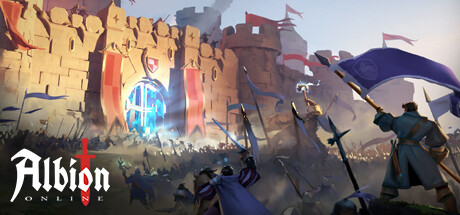
Albion Online is the closest living relative of Ultima Online’s PvP loop. Every weapon, set, and mount is crafted from gathered materials. Step into a red or black zone and the gear you are wearing drops on death. Guilds fight over territories on a weekly schedule, and the rewards feed back into the economy that keeps the loop running. Albion is the only entry on this list that ships native clients for Windows, macOS, Linux, plus Android and iOS, and the cross-play actually works at the same character.
Where it falls short: the click-to-move combat takes getting used to coming from action MMOs, and the early game is a long grind through yellow zones before the real PvP opens up.
Pricing:
- Free: full access with reduced learning and faster fame from Premium status absent
- Paid: Premium $9.95/mo or buy with in-game silver
- Founder packs available, not required
Platforms: Windows, macOS, Linux, Android, iOS
Download: Albion Online official
Bottom line: the best living sandbox MMO if territory war and a working market are the things the Stars Reach pitch made you care about.
2. EVE Online, best for politics, espionage, and scale
EVE Online is the sandbox the others get compared to. New Eden is one shard, every player visible on the same map. Player corporations build coalitions, declare null-sec wars, run market cartels, and occasionally lose trillion-ISK super-capital fleets in headline battles. The skill-training system runs in real time, in or out of the game, which is either zen or maddening depending on temperament.
Where it falls short: the new-player experience is famously punishing, and the time between joining a corp and actually mattering is measured in months.
Pricing:
- Free: Alpha clones get a slimmed-down skill tree and can play indefinitely
- Paid: Omega subscription $19.99/mo, also available as in-game PLEX bought with ISK
- No mandatory upfront purchase
Platforms: Windows, macOS, Linux
Download: EVE Online official
Bottom line: if the appeal of Stars Reach is player-driven politics and a real economy at scale, EVE has been doing it for twenty-two years.
3. Mortal Online 2, best for first-person hardcore PvP
Mortal Online 2 is the first-person sandbox that drops everything you own when you die outside the safe zones. There is no map, no quest markers, no fast travel. Knowledge is gained by exploring, asking other players, and dying a lot. Crafting depth is unusual: a master smith picks a region, a school, and a series of decisions that produce a gear signature other players learn to recognise.
Where it falls short: the population is smaller than Albion or EVE, so the world can feel empty outside hub cities and active war zones, and the systems are unforgiving for casual sessions.
Pricing:
- Free: none
- Paid: $39.99 base game on Steam, plus optional subscription for the second character slot and bank space
Platforms: Windows (Proton-compatible on Linux)
Download: Mortal Online 2 on Steam
Bottom line: the right pick for players who want a world that punishes mistakes and rewards local knowledge.
4. ATLAS, best for naval sandbox and base building
ATLAS is what happened when the Ark team built a pirate MMO out of an Ark code fork. The world is a grid of 4x4 servers, each its own biome. Players build ships from individual planks, crew them with NPCs and friends, sail between zones, and lay siege to enemy island claims. Land claims are the political currency: a settled island accrues resources, taxes guests, and becomes a war target.
Where it falls short: the launch was rocky and the early-access reputation lingers, but the game has been getting steady updates and the player count has stabilised on community servers.
Pricing:
- Free: none
- Paid: $9.99 on Steam, frequent sales drop it lower
- Private servers are common and often free to join
Platforms: Windows
Download: ATLAS on Steam
Bottom line: the boat-and-base sandbox if you want naval combat with the territory game underneath it.
5. Wurm Online, best for terrain shaping and craft purity
Wurm Online is older than World of Warcraft, still running, and still letting players reshape the world with shovels. The terrain is fully deformable. A guild can dig a canal across a continent. Skills run up to 100 with two decimal points, and crafting failures still produce useful intermediate items. The pace is slow by design, and the community treats Wurm like a long-running garden.
Where it falls short: the visuals are a snapshot of 2006 and the UI takes a few hours to internalise. The population is small and concentrated.
Pricing:
- Free: Freedom Isles allow play to skill 20 with reduced inventory
- Paid: Premium $9.50/mo or annual discount, unlocks full skill progression and priest paths
Platforms: Windows, macOS, Linux
Download: Wurm Online official
Bottom line: the deepest crafting and terrain sandbox of the bunch, if the visual style and unhurried pace are not a barrier.
6. Pax Dei, best for medieval social sandbox
Pax Dei is the newest entry, a medieval life and community sandbox from Mainframe Industries in early access. Players settle in valleys, build homes that other players can visit, and craft toward higher-tier gear through a long progression curve. PvP is opt-in, contested zones are clearly flagged, and the design is leaning closer to Koster’s social sandbox vision than to MO2’s hardcore loot.
Where it falls short: still missing endgame systems and content patches are slow. The early-access expectations have to be set accordingly.
Pricing:
- Free: none in early access
- Paid: $39.99 founder pack, no subscription announced for launch
Platforms: Windows
Download: Pax Dei on Steam
Bottom line: the social sandbox to watch if the Stars Reach pitch about community-first worlds is what hooked you.
7. Project Gorgon, best for skill-based progression and surprise
Project Gorgon is a two-developer indie sandbox that earned its small but loyal following the hard way. Skills replace classes, and a player can stack thirty of them at once. Curses turn characters into cows or pigs, with their own skill trees, and the world hides hundreds of strange interactions behind player-to-player word of mouth.
Where it falls short: the art style is rough and the population is the smallest on this list, so finding a guild takes effort and the world feels quiet outside hub areas.
Pricing:
- Free: demo client available with limited skill caps
- Paid: $39.99 one-time on Steam, no subscription
Platforms: Windows (Proton on Linux), older macOS client available from the developer
Download: Project Gorgon on Steam
Bottom line: for the player who reads MMO patch notes for fun and wants a sandbox that still surprises them after a year.
How to pick the right one
- If you read the Stars Reach pitch and the words that hooked you were “territory” and “loot,” start with Albion Online. The full-loot zones, guild warfare, and cross-platform client are what Albion has been refining for ten years.
- If “player-driven economy at scale” hooked you, EVE Online is the unmatched answer. Bring a calendar.
- If “first-person hardcore” hooked you, Mortal Online 2 is the closest living relative of UO’s full-loot rule.
- If “community sandbox without ganks” was the appeal, Pax Dei is the early-access bet, with Wurm Online as the established alternative.
- If “weird and deep” hooked you and you do not need 10,000 concurrents to enjoy a world, Project Gorgon is unlike anything else on the list.
- Skip ATLAS unless naval combat and island-building specifically appeal. The land MMO loop is thinner than the others here.
FAQ
When does Stars Reach launch?
Stars Reach is in a closed preview phase as of mid-2026, with no public launch date confirmed by Playable Worlds. The current build is what the press has hands-off access to. Track the developer’s blog and the closed-test signups for invitation waves.
What is the best free sandbox MMORPG on PC?
Albion Online is free to download and play indefinitely without Premium status, and Premium can be purchased with in-game silver if you avoid spending real money. EVE Online’s Alpha clones are also fully free with a restricted skill tree, and Omega time can be paid for with in-game ISK.
Is there a Stars Reach alternative I can play right now?
Stars Reach is closest in spirit to Star Wars Galaxies and Ultima Online. The closest living analogues are Albion Online for the loot-and-territory loop, Pax Dei for the social settlement angle, and Project Gorgon for the skill-stacking weirdness Koster has talked about wanting.
Which sandbox MMOs run on Mac or Linux?
Albion Online ships native clients on Windows, macOS, and Linux. EVE Online has native macOS and Linux clients. Wurm Online runs on all three. Most Windows-only titles like Mortal Online 2 and Pax Dei work well through Proton on Steam Deck and Linux desktops.
Are any of these new-player friendly for PvP?
Albion Online’s yellow zones cap PvP losses to durability damage rather than full loot, which lets new players learn the combat without dropping their gear bag. EVE Online’s high-sec space is technically PvP-enabled but heavily policed by CONCORD, so most early-game encounters are PvE.