Embark Studios confirmed that ARC Raiders now requires Denuvo Anti-Cheat for every player, no opt-out, as a condition of matchmaking. That decision put a familiar debate back in front of PC players: kernel-level anti-cheat runs as a driver with the same access as the operating system itself, loads before Windows finishes booting, and in most cases refuses to start at all on Linux or Steam Deck. Riot’s Vanguard, Activision’s Ricochet, and Denuvo Anti-Cheat all work this way. The tradeoff is real. A driver that can inspect every process on a machine is also a driver that, if compromised or buggy, can crash the system or open a security hole nobody asked for.
Not every good PC game needs that level of access. This list covers eight desktop games that catch cheaters, or simply do not need to, without ever touching kernel space. Every one of them installs cleanly on Windows, macOS, and Linux, and most run natively or through Proton with no anti-cheat compatibility layer to fight.
What to look for in an anti-cheat-free game
- Linux and Proton compatibility. A game with no kernel driver almost always runs on Linux, since there is no anti-cheat module blocking Valve’s compatibility layer.
- No rootkit-level driver. Steam’s own VAC (Valve Anti-Cheat) runs in user space and scans client-side, which is a meaningfully smaller attack surface than a kernel driver.
- Steam Deck verification. Valve’s own testing catches anti-cheat conflicts before a purchase, so a “Verified” badge is a fast signal the game will just work.
- Single-player or peer-to-peer multiplayer. Games without dedicated competitive matchmaking rarely need invasive anti-cheat, since there is no ranked ladder to protect from cheaters.
- Active development. A studio still patching the game is a studio that would notice and respond if cheating became a real problem, rather than reaching for a kernel driver as a first resort.
Quick comparison
| Game | Best for | Steam Deck verified? | Multiplayer? | Anti-cheat used |
|---|---|---|---|---|
| Deep Rock Galactic | Co-op mining shooter | Yes | Yes, 4-player co-op | Steam VAC only |
| Hades | Single-player roguelike | Yes | No | None needed |
| Stardew Valley | Farming and co-op | Yes | Yes, peer-to-peer | None needed |
| Terraria | Sandbox survival | Yes | Yes, peer-to-peer | None needed |
| Hollow Knight | Single-player metroidvania | Yes | No | None needed |
| Slay the Spire | Deckbuilding roguelike | Yes | No | None needed |
| Balatro | Card-based roguelike | Yes | No | None needed |
| Baldur’s Gate 3 | Story RPG with co-op | Yes | Yes, up to 4-player | Steam VAC only |
The 8 best games without kernel-level anti-cheat
1. Deep Rock Galactic - best co-op shooter
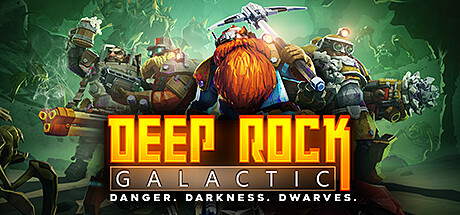
Deep Rock Galactic is a four-player cooperative mining shooter where dwarves blast through procedurally generated caves, haul resources, and fend off swarms of alien bugs. Ghost Ship Games built the game’s whole economy around cosmetic unlocks rather than competitive ranking, which removes the usual incentive studios cite for kernel-level anti-cheat. The client relies entirely on Steam’s VAC layer and runs natively on Linux.
Where it falls short: The mission structure repeats after a few dozen hours, and solo play loses most of the tension the game is built around.
Pricing: $29.99 on Steam. Frequent 50% off sales bring it closer to $15.
Platforms: Windows, macOS, Linux (native).
Download: Steam
Bottom line: The clearest proof that a co-op shooter does not need a kernel driver to stay cheat-free enough for its player base.
2. Hades - best single-player roguelike
Hades is a single-player action roguelike from Supergiant Games, built around escaping the underworld one procedurally shuffled run at a time. There is no matchmaking, no leaderboard worth protecting with intrusive software, and no anti-cheat layer of any kind. Steam Deck verification is full green across every category.
Where it falls short: The narrative payoff depends on repeated runs, so players looking for a single linear campaign will bounce off the structure.
Pricing: $24.99 on Steam.
Platforms: Windows, macOS, Linux (native, Steam Deck Verified).
Download: Steam
Bottom line: A tightly designed roguelike that never had a reason to ask for kernel access in the first place.
3. Stardew Valley - best low-pressure multiplayer
Stardew Valley runs its four-player farming co-op on direct peer-to-peer connections, with no dedicated server and no anti-cheat process running in the background. The pace is slow by design: plant crops, mine, fish, and build relationships with the town on a schedule that never punishes players for missing a session.
Where it falls short: Co-op requires either LAN or manually shared IP connections unless players go through Steam’s built-in invite system, which adds a small setup step compared to matchmaking-based games.
Pricing: $14.99 on Steam.
Platforms: Windows, macOS, Linux (native, Steam Deck Verified).
Download: Steam
Bottom line: The safest possible co-op pick for players who want to play with friends without any anti-cheat software involved at all.
4. Terraria - best sandbox survival
Terraria pairs 2D sandbox building with survival combat across a world players dig, build, and fight through together. Multiplayer runs over peer-to-peer or self-hosted servers, and Re-Logic has never added a kernel-level anti-cheat layer in over a decade of updates. The game still receives content patches years after its original release.
Where it falls short: Public servers hosted by third parties can run modified clients, so cheating is possible in unofficial multiplayer even though the base game ships nothing invasive.
Pricing: $9.99 on Steam.
Platforms: Windows, macOS, Linux (native, Steam Deck Verified).
Download: Steam
Bottom line: A decade-old game that proves ongoing support and a clean anti-cheat record are not mutually exclusive.
5. Hollow Knight - best single-player metroidvania
Hollow Knight is a hand-drawn, single-player metroidvania set in the ruined insect kingdom of Hallownest. Team Cherry shipped no multiplayer component and no anti-cheat process of any kind, which keeps the install about as lightweight as a modern game gets. Steam Deck verification covers the full game, including its expansion content.
Where it falls short: Boss difficulty spikes hard in the back half, and the game offers no difficulty settings to soften it.
Pricing: $14.99 on Steam.
Platforms: Windows, macOS, Linux (native, Steam Deck Verified).
Download: Steam
Bottom line: A single-player pick with zero anti-cheat footprint and one of the best-regarded difficulty curves in the genre.
6. Slay the Spire - best deckbuilding roguelike
Slay the Spire combines deckbuilding with roguelike run structure, climbing a tower one card battle at a time while building synergies between relics and cards. MegaCrit built the entire game around single-player runs, so there was never a case for a kernel-level driver. Daily climb leaderboards run on server-side validation rather than a local anti-cheat process.
Where it falls short: The visual style is functional rather than striking, and newcomers to deckbuilders face a real learning curve before runs start clicking.
Pricing: $24.99 on Steam.
Platforms: Windows, macOS, Linux (native, Steam Deck Verified).
Download: Steam
Bottom line: The deckbuilder that defined the genre, still running clean years after launch.
7. Balatro - best card-based roguelike
Balatro turns poker hands into a scoring roguelike, stacking joker cards to push scores into the billions across escalating rounds. LocalThursday built it as a purely single-player experience, so the install carries no anti-cheat software of any kind. The game became one of 2024’s biggest indie breakouts and continues picking up content updates.
Where it falls short: Runs are short, often under 30 minutes, which suits quick sessions but disappoints players wanting longer single sittings.
Pricing: $14.99 on Steam.
Platforms: Windows, macOS, Linux (native, Steam Deck Verified).
Download: Steam
Bottom line: One of the cleanest, most addictive picks on this list, with nothing installed beyond the game itself.
8. Baldur’s Gate 3 - best story RPG with co-op
Baldur’s Gate 3 is Larian Studios’ sprawling story RPG built on Dungeons & Dragons rules, playable solo or with up to three friends in drop-in co-op. Despite shipping full multiplayer, Larian never added kernel-level anti-cheat, relying on Steam’s standard VAC protection instead. The game earned Steam Deck Verified status shortly after launch and receives regular patches years later.
Where it falls short: A single campaign run can run past 100 hours, which is a serious time investment compared to everything else on this list.
Pricing: $59.99 on Steam.
Platforms: Windows, macOS, Linux (native, Steam Deck Verified).
Download: Steam
Bottom line: Proof that even a full-scale multiplayer RPG can ship without a kernel-level driver anywhere near the install.
How to pick the right one
If Steam Deck or Linux is the primary machine, every game on this list runs natively or through Proton without a compatibility fight, so pick by genre instead. If cooperative play with friends matters most, start with Deep Rock Galactic for fast-paced runs or Stardew Valley for something slower. If the goal is a single-player game with zero anti-cheat footprint at all, Hades, Hollow Knight, Slay the Spire, and Balatro all qualify outright, since none of them run any anti-cheat process.
Players who want the scale of a full RPG without a kernel driver should go straight to Baldur’s Gate 3, which proves a big-budget multiplayer game can ship on Steam’s standard protection alone. Anyone burned out on games like ARC Raiders that now mandate driver-level software should treat Terraria as the long-term pick: over a decade of updates with no anti-cheat escalation, ever.
FAQ
What does kernel-level anti-cheat actually do? It installs a driver that runs with the same privilege level as the operating system, letting it inspect other processes and memory before the game even starts. That access is powerful for catching cheats but also means a flaw in the driver can affect the whole system, not just the game.
Why doesn’t Linux or Steam Deck support most kernel-level anti-cheat? Kernel drivers are written for Windows specifically and usually will not load under Proton, the compatibility layer Steam Deck and Linux use to run Windows games. Some studios choose not to certify their driver for Proton at all, which blocks the game outright on those platforms.
Is Steam’s VAC the same thing as kernel-level anti-cheat? No. VAC runs in user space, scans the client for known cheat signatures, and does not install a system-level driver. It catches less than a kernel-level system in theory, but it also carries none of the same access or compatibility risk.
Does ARC Raiders work on Steam Deck now that Denuvo Anti-Cheat is mandatory? As of the Denuvo Anti-Cheat requirement, ARC Raiders is not Steam Deck Verified and Linux support is unresolved. Players on Linux or Steam Deck should check Valve’s current Deck compatibility rating before buying.
Are any of these eight games multiplayer-capable despite skipping kernel anti-cheat? Yes. Deep Rock Galactic, Stardew Valley, Terraria, and Baldur’s Gate 3 all support multiplayer, and none of them require a kernel-level driver to do it.
Will more studios move away from kernel-level anti-cheat? Some already have, favouring user-space detection or peer-to-peer designs instead. But competitive shooters with real prize pools or ranked ladders tend to keep kernel-level systems, since the studios view the tradeoff as worth the cheating deterrent.